Blog
When Birth Training Falls Short, Outcomes Suffer — Here’s How We Changed That

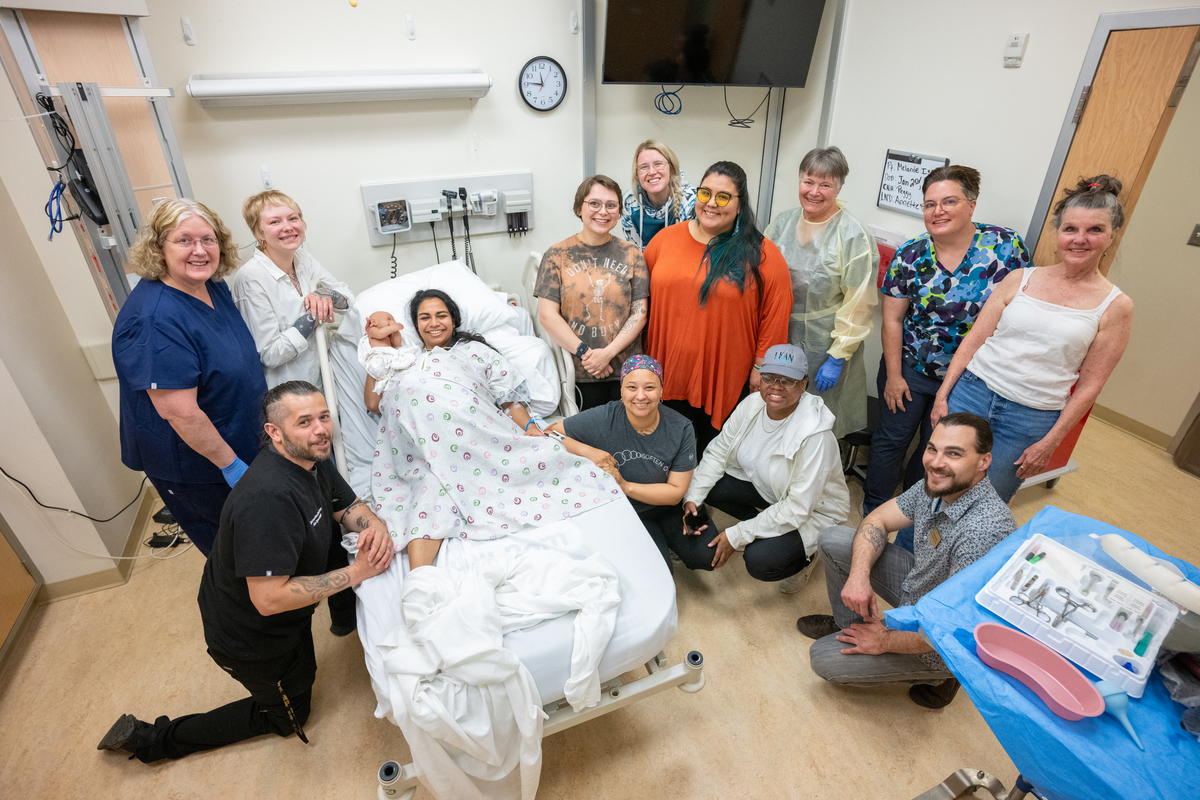
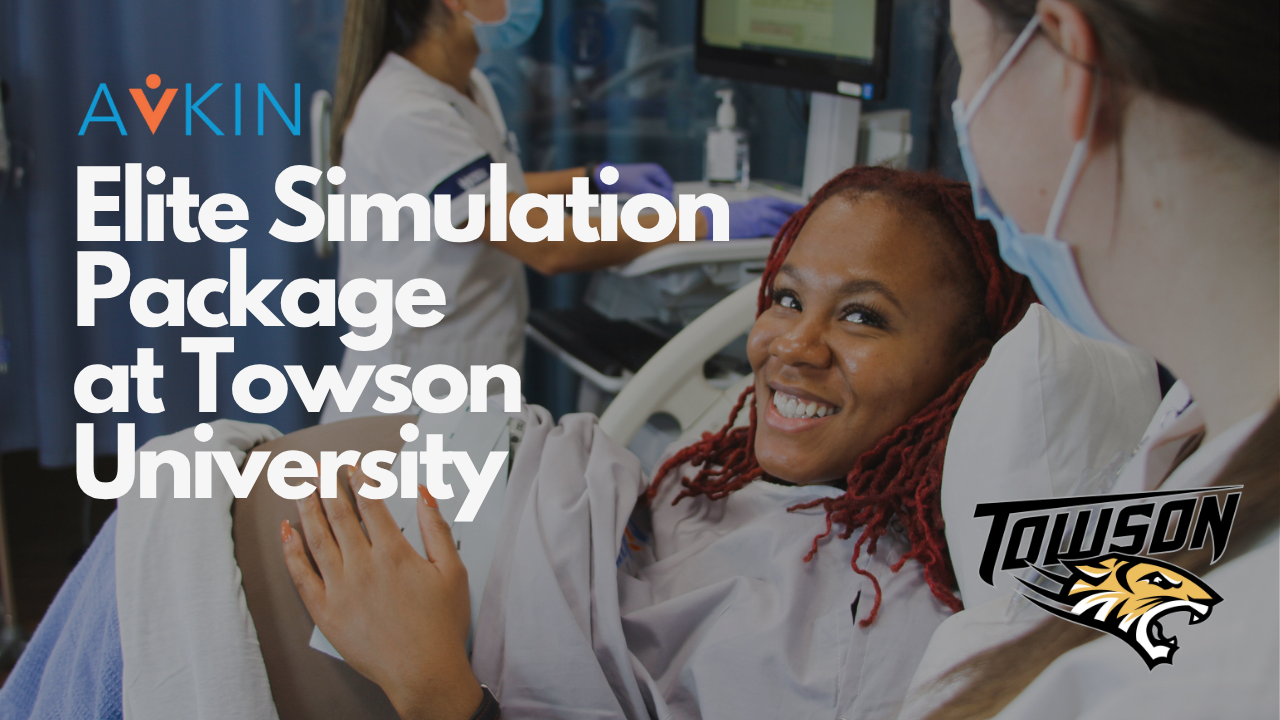
There’s a moment in nearly every birth where everything hangs in the balance. Simulation participants gather to celebrate a successful (simulated) birth as UAA College of Health Simulation Center uses a wearable birthing simulator, Avbirth. A device to help train students in the Full Embrace Doula Program, which provides comprehensive education, mentorship, and capacity-building to expand access to culturally attuned birth support in Alaska.
It’s not always dramatic. Sometimes it’s quiet—a shift in tone, a missed cue, a breakdown in communication. But those moments matter because they shape outcomes and trust. And too often, they reveal a gap in how we prepare the people who are meant to support birthing families.
For doulas, who are proven to improve maternal and infant outcomes, training has historically relied on discussion, observation, or manikins that lay on their back. And while those methods offer some value, they don’t fully prepare doulas for the realities of labor—the unpredictability, emotional intensity, and clinical escalation they encounter every day.
Put simply: you can’t fully prepare for birth without experiencing it with a live person. And that’s the problem.
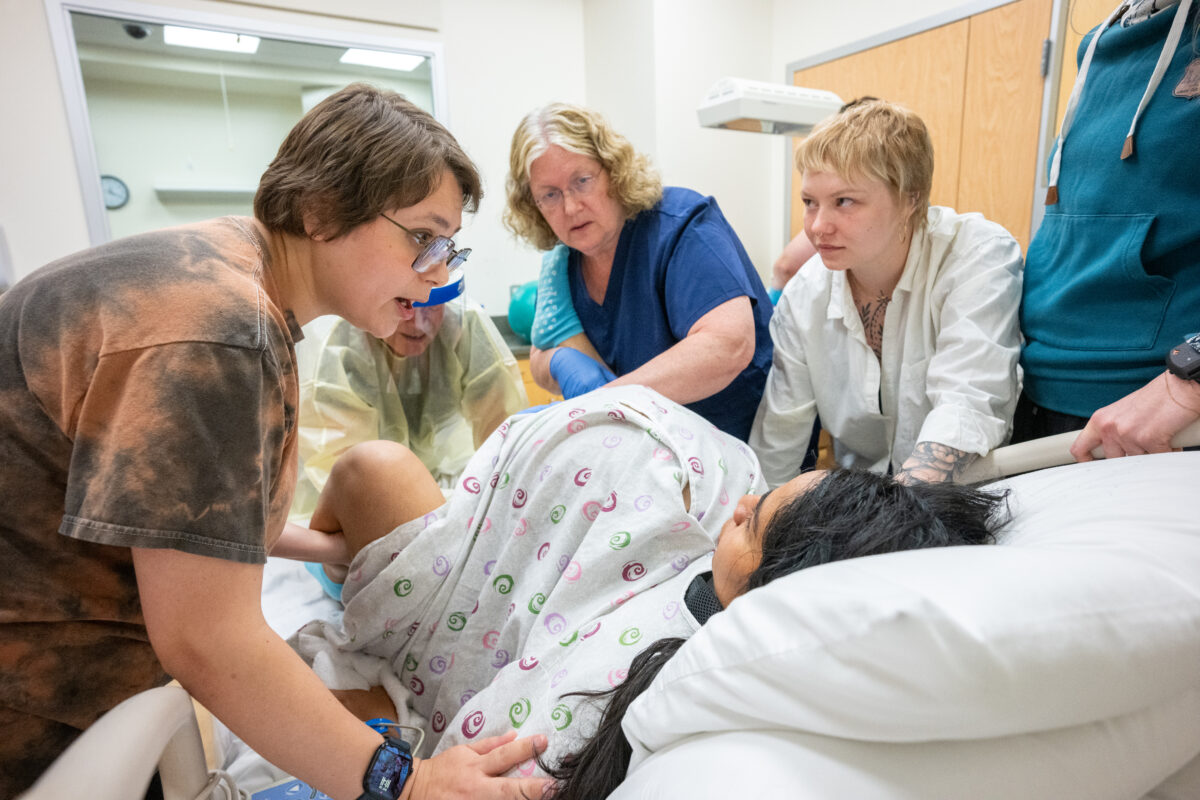
Simulation Day
On June 28, 2025, something different happened at the University of Alaska Anchorage. Inside the Interprofessional Health Sciences Simulation Center, doulas stepped into a training environment that didn’t just talk about birth—it recreated it.
Through a collaboration between UAA, the Division of Population Health Sciences, and Due North Support Services’ Full Embrace Doula Program, trainees participated in a fully immersive, hospital-based birth simulation. But this wasn’t a typical simulation.
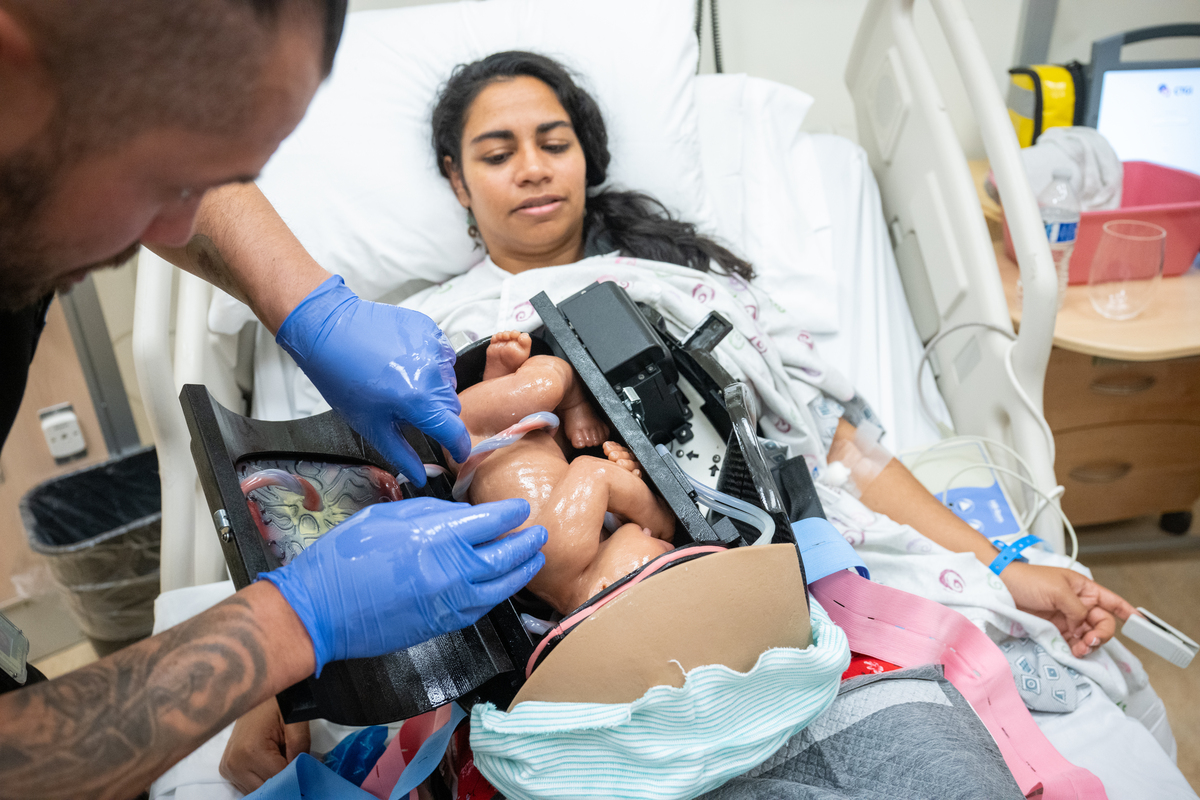
For the first time, the center integrated the Avbirth: the only automated wearable birthing simulator— designed to replicate contractions, labor progression, and delivery in real time. And that changed everything in their learning process.
Rather than imagining what an emergency birth might feel like, learners are immersed in it—training in a safe, controlled environment where the urgency, emotion, and clinical complexity feel real. Instead of working with static manikins lying on their backs, they engage in dynamic, high-pressure scenarios alongside a responsive birthing person, as well as partners, clinicians, and family members—mirroring real-life situations.
They practiced what matters most:
- Staying grounded when stress rises
- Supporting communication when it breaks down
- Advocating for patients in complex clinical environments
- Building trust in moments of uncertainty
These are the moments that define outcomes—and until now, they’ve been the hardest to teach.
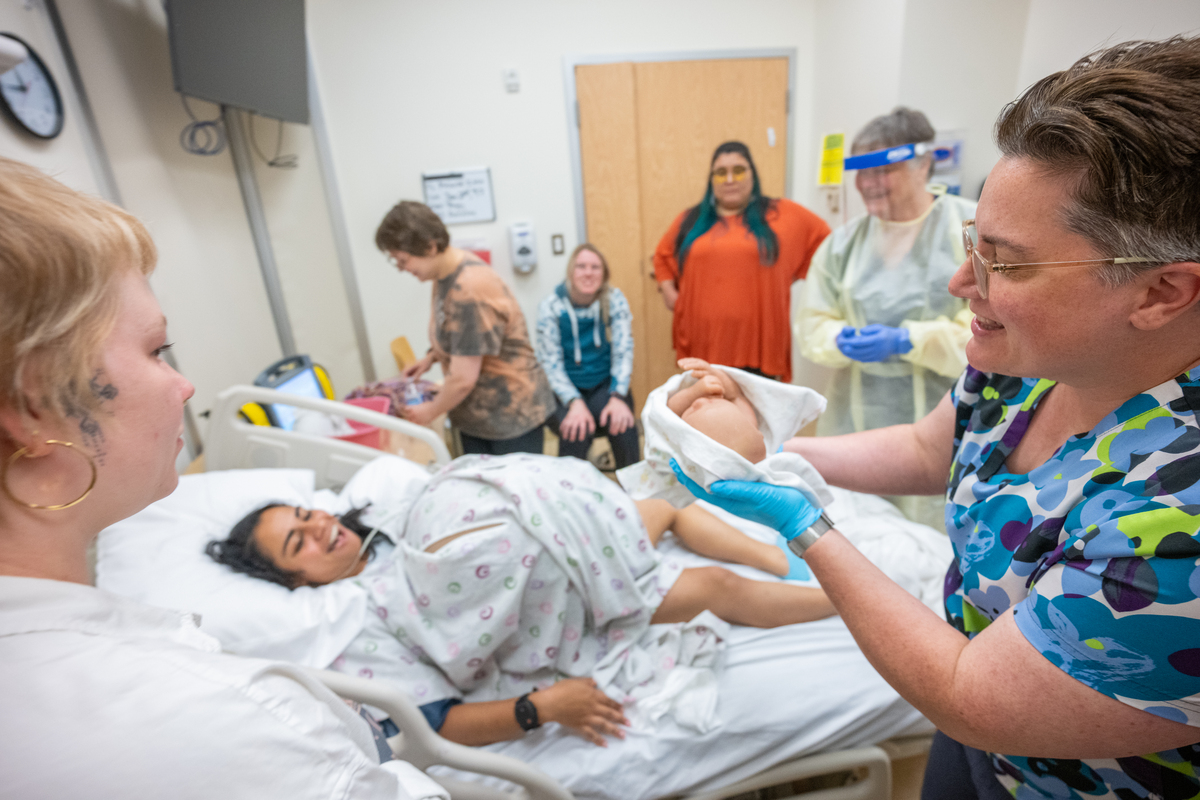
Simulation Center Director Sara Hannon presents the (simulated) newborn to Bethany Alvarez, portraying the expectant mother, as UAA College of Health Simulation Center uses a wearable Avbirth Childbirth Simulation Device for the first time to help train students in the Full Embrace Doula Program, which provides comprehensive education, mentorship, and capacity-building to expand access to culturally attuned birth support in Alaska.
As Dalecia Young, founder of Full Embrace, put it: “This training gave us the tools to respond to stress, uncertainty, and emergencies with calm, skilled support that builds trust and safety.”
We already know doulas make a difference. Research consistently shows they can reduce cesarean rates, shorten labor, and improve maternal and infant health outcomes. And yet, access to high-quality doula training, especially in rural or underserved areas, remains limited.
In places like Alaska, the challenge is even more pronounced. There’s no shortage of people who could become exceptional doulas. What’s missing is the infrastructure to train them at scale, and at the level of realism required to truly prepare them.
This is where traditional training models hit a ceiling. Because reading about birth isn’t the same as being in the room. Watching birth isn’t the same as responding in real time. And when complications arise, that gap becomes critical.
The introduction of the Avbirth system didn’t just enhance the simulation—it redefined it. The wearable device created a level of physical and emotional realism that shifted how trainees engaged, reacted, and learned.
Assistant Professor Lisa Schwarzburg shared: “As someone who has given birth multiple times, I thought the simulator added impressive realism… that kind of detail matters when teaching support roles.”
That realism isn’t just about immersion—it’s about retention, confidence, and performance under pressure. Because when learners feel the scenario, they don’t just remember what to do. They know how to do it.
What happened at UAA wasn’t just a successful training day. It was a glimpse of what’s possible when education, technology, and community come together.
This model bridges the gap between clinical and community care, expands access to high-quality training, strengthens collaboration across care teams, and prepares doulas to operate confidently in complex environments. And perhaps most importantly, it scales.
The simulation is being developed into a video resource, extending its impact to rural and remote communities where access to hands-on training is limited. That’s how change happens—not in isolated moments, but in systems that can grow.
Next Steps
Maternal health in the U.S. is at a crossroads. With increasing pressure from rural hospital closures and funding uncertainties, communities are being asked to do more with less. In that environment, solutions that are scalable, evidence-based, and community-driven aren’t optional—they’re essential.
At Avkin, we believe simulation should do more than demonstrate—it should transform. The Avbirth system was designed to close the gap between theory and reality. To give learners the opportunity to practice not just procedures, but presence. Not just knowledge, but judgment.
Amy Cowperthwait the CEO of Avkin comments “We aimed to create a fully automated, wearable birthing simulator that allows students to experience a truly immersive training environment. Existing products on the market do not adequately prepare students for real-world scenarios.”
Because better training leads to better outcomes. And better outcomes start with preparation that feels real. The question isn’t whether we can improve maternal health training from traditional manikins. It is whether we’re willing to embrace the tools and partnerships that make it possible for rural institutions to get the necessary technology to scale proper training.
Learn More about Avbirth Here!