Blog
Wearable Simulators Solved Our Clinical Placement Problem

At Lurleen B. Wallace Community College, we faced a challenge that many nursing programs—especially in rural areas—know all too well: limited access to meaningful clinical placements. It wasn’t just about placing students in clinical sites; it was about the quality of what they experienced once they got there. Wearable simulators solved our clinical placement problem, transforming those limitations into richer, more consistent hands-on learning opportunities
For our OB site, a “good day” might mean a two-hour commute… only to see one birth or maybe two if they were lucky. And even then, the chances of being actively involved in patient care were slim. That’s not a knock on our clinical partners. It’s the reality of rural healthcare.
But it raised a bigger question for us: Are students truly prepared if their clinical experience is mostly observational?
We’ve all heard it said: “Nothing replaces real-world experience.” But what happens when that experience is inconsistent, unpredictable, or passive? Students standing in the corner of a labor room, if they’re even allowed in, aren’t building confidence. They’re not practicing decision-making. And they’re certainly not developing the kind of empathy that comes from being part of the moment.
Simulation didn’t always feel this way. For years, programs relied on traditional manikin-based simulation but it never quite reached the level of immersion or engagement we were looking for. It often felt controlled, predictable, and removed from real human interaction. That changed when we introduced wearable simulators from Avkin.
Simulation became active. It became immersive. It demanded participation.
Because for the first time, it included what had been missing all along: real human connection.
Healthcare isn’t just technical—it’s deeply personal. And we knew our students needed to feel that. So we asked: What if simulation could be both clinically rigorous and deeply human?
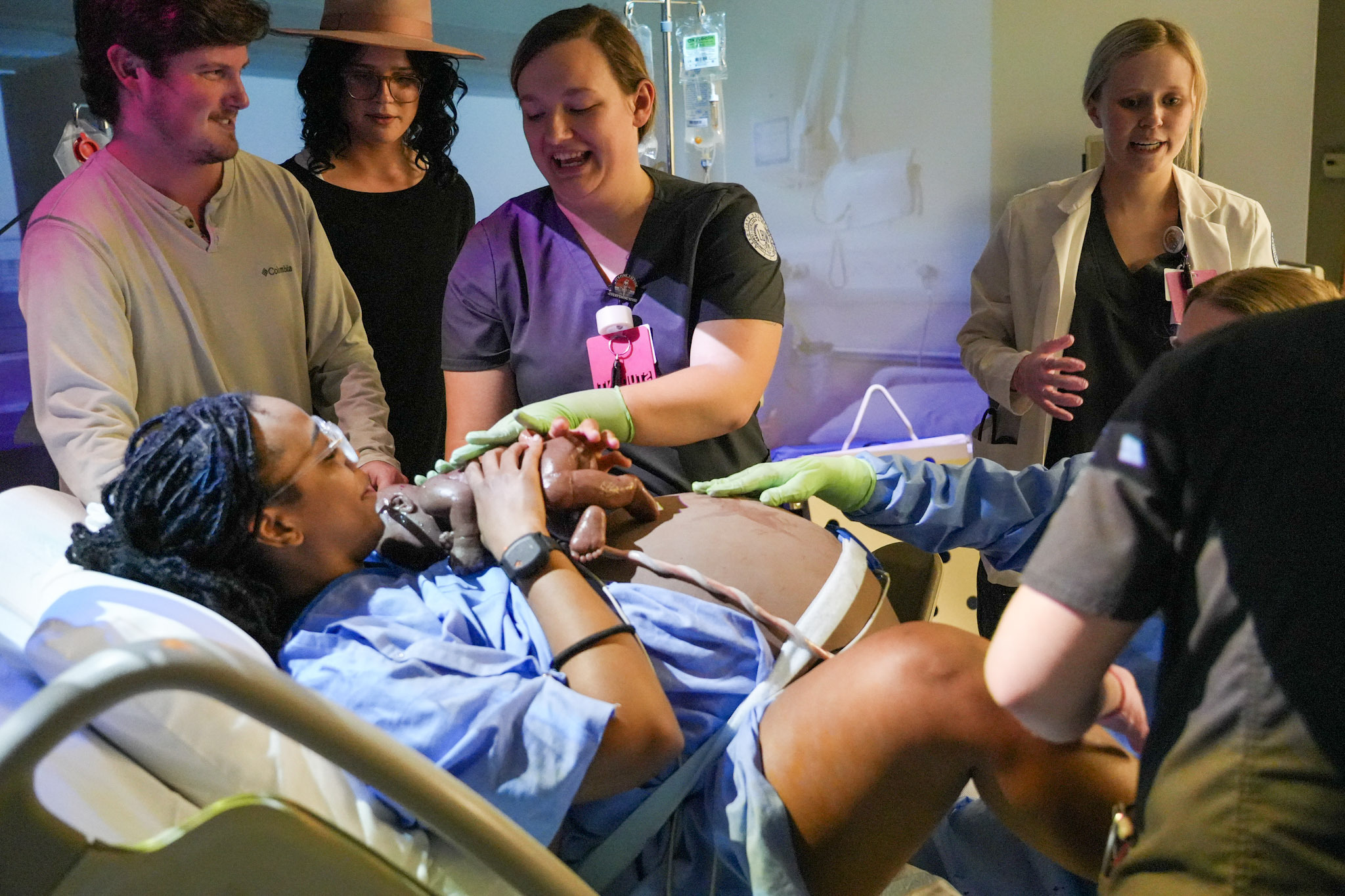
Which is why we implemented Avbirth. This wasn’t just a technology upgrade, it was a complete shift in how we approached experiential learning. With wearable simulators, our faculty become the patient.
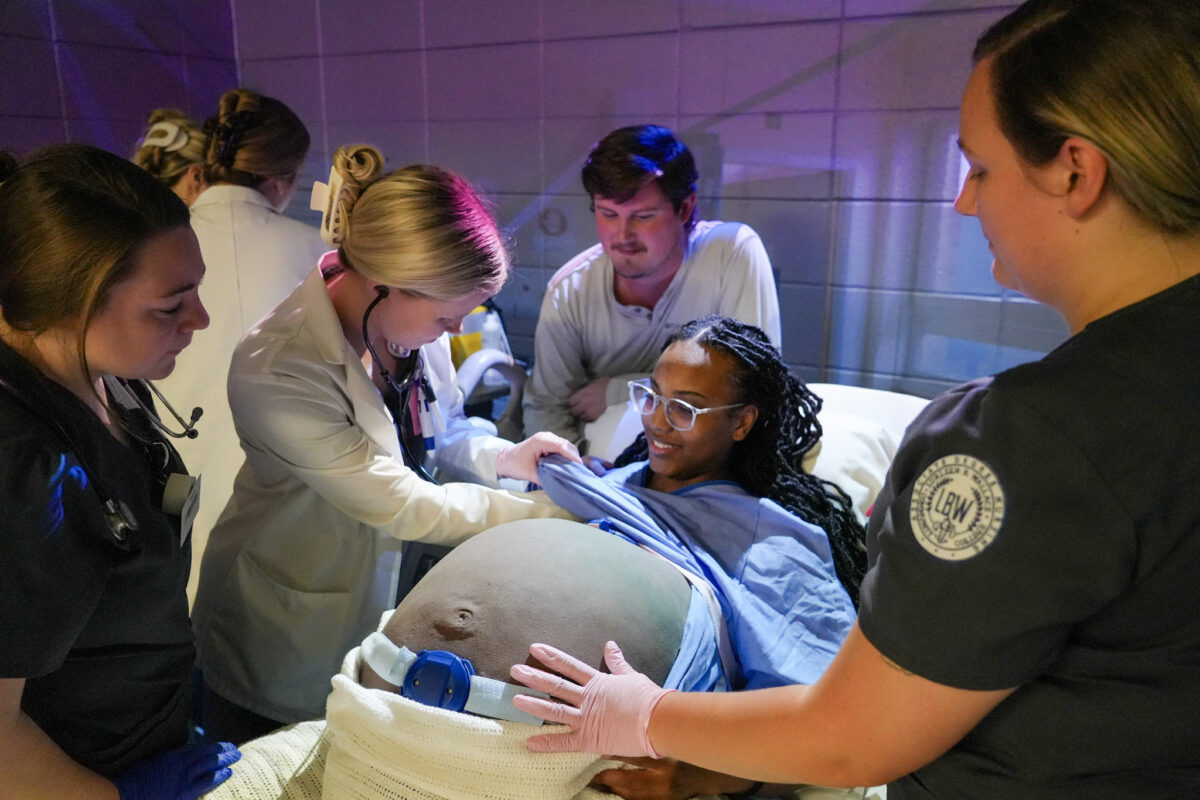
Instead of interacting with a manikin, students engage with a real person wearing a high-fidelity simulator. That means that they make eye contact, read body language, respond to emotional cues, and navigate real conversations. And because wearable technology allows us to simulate everything from uncomplicated births to high-risk emergencies, students get exposure to scenarios they might never see during clinical rotations. In one controlled environment, we can recreate an entire spectrum of care.
Bringing the Psychosocial Side of Healthcare to Life
One of the most powerful shifts we’ve seen is in how students engage with the human side of care. We intentionally design scenarios that reflect real situations in our community.
In one simulation, we present a shoulder dystocia emergency. Clinically, it’s already high-stakes. But we add another layer: the mother expresses fear that her baby may be placed in foster care—because two of her previous children were. Now students aren’t just managing a delivery complication. They’re navigating patient anxiety, trauma-informed communication, ethical awareness, and emotional regulation.
In another simulation, we explore complications during a pregnancy achieved through IVF. During the scenario, the patient shares the financial burden of treatment, the emotional toll of infertility, and the fear of losing the pregnancy. One student opened up about their own future during the debrief, knowing that they may need IVF one day. That moment transformed the learning experience. It wasn’t just about clinical intervention anymore. It became about empathy, identity and perspective. And those are the moments that shape better healthcare providers.
Students also get the benefit of observing other simulations. Within a day of simulation students will observe 3 birthing simulations, all with different humanitarian elements, and participate in one. We consistently hear students reflect during debrief that they picked up on therapeutic communication techniques from the group before them—what worked, what didn’t, and how they would approach it differently.
By combining standardized patients with Avkin wearable simulators, we’ve created an environment where:
- Every scenario feels real
- Every interaction matters
- Every student is engaged—whether they’re observing or participating
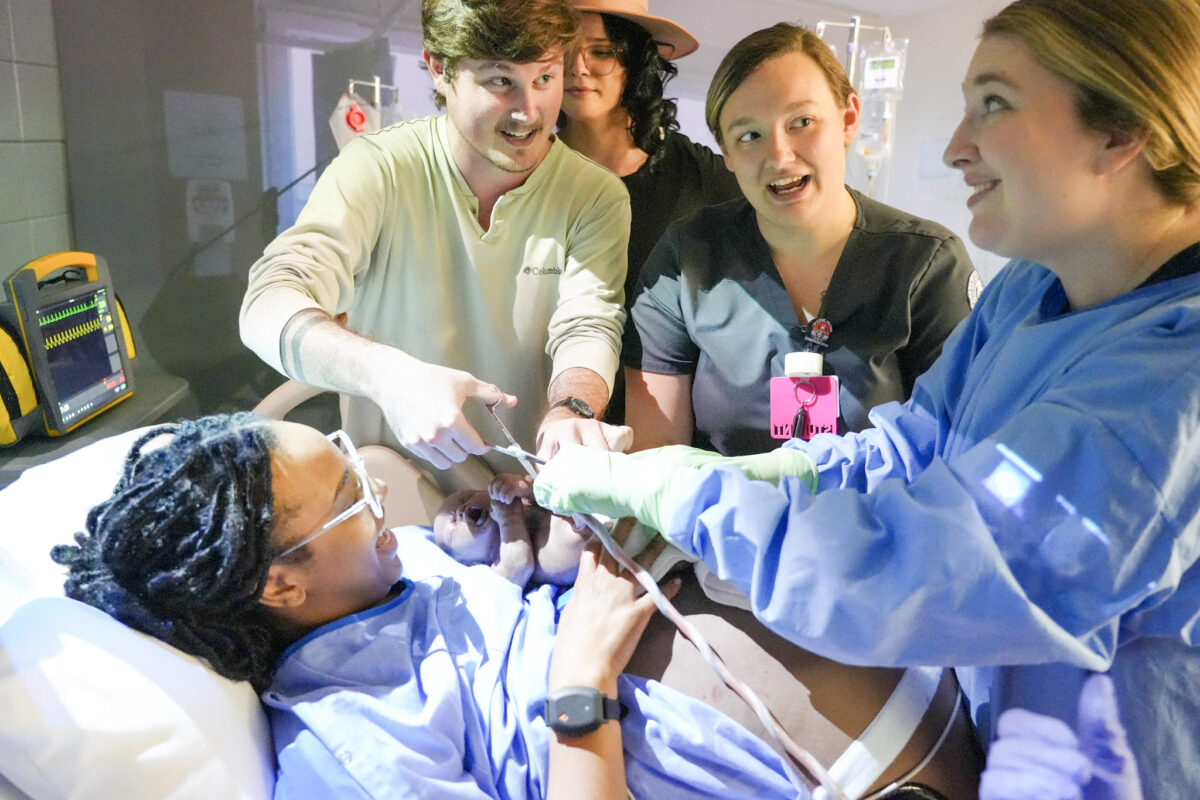
There’s no “just checking the box” during simulation anymore. Students show up differently when there’s a person in front of them—wearable simulators solved our clinical placement problem by making the experience feel real and immediate. They listen more closely, communicate more thoughtfully, and reflect more intentionally. Ultimately, they care more deeply—not just about the skills, but about the person behind the patient.
We’ve seen increased student engagement, stronger clinical reasoning, higher confidence in high-risk scenarios, and deeper empathy for patients. But perhaps most importantly is that students are no longer passive learners but instead active participants in every scenario.
Want to see Wearable Simulators in action? Click here for more information.
To Learn more about Lurleen B Wallace nursing program, click here