Real Moments in Childbirth: Why Human-to-Human Contact Matters in Simulation

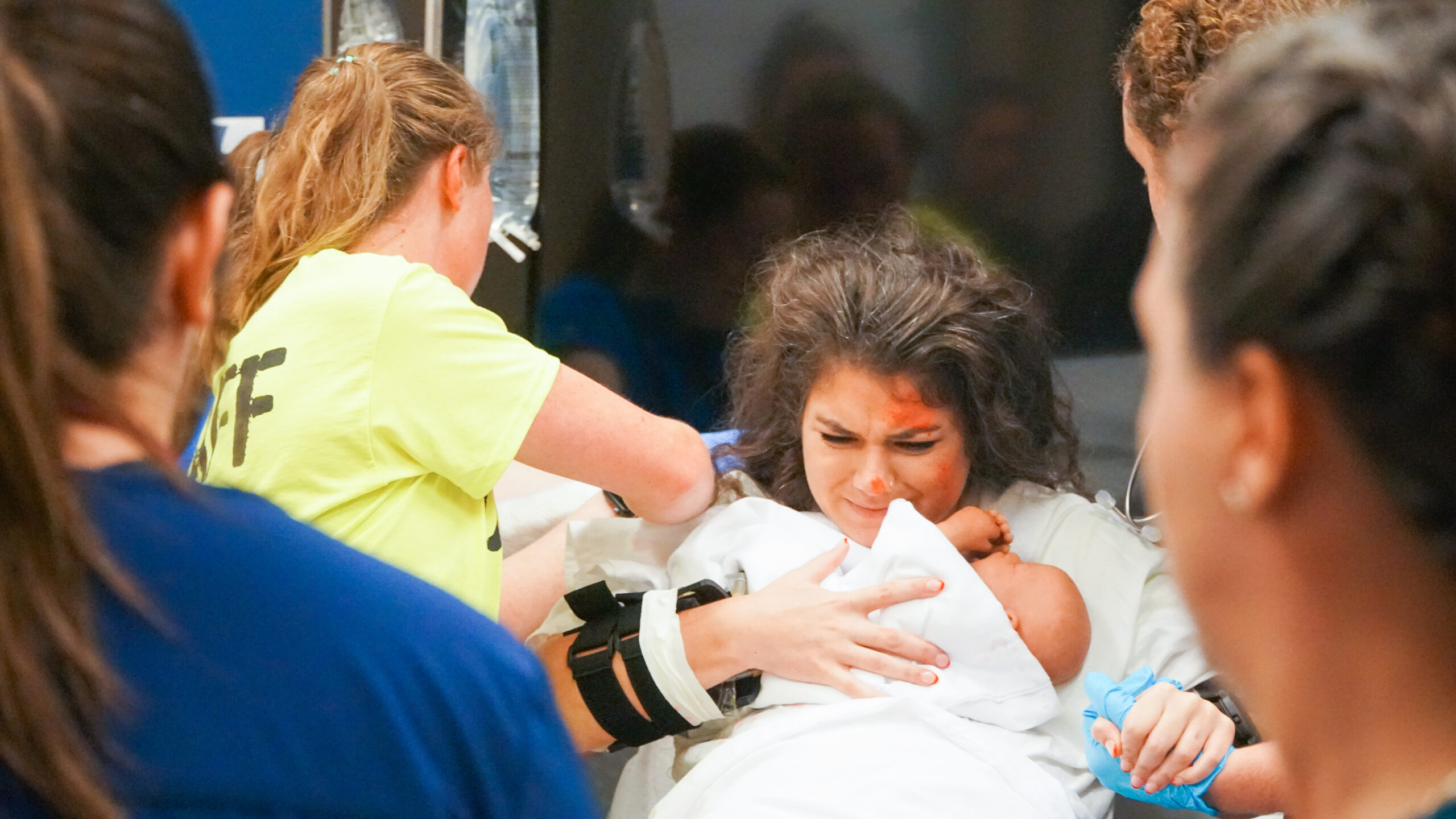
Childbirth is not just a clinical event. It is a deeply human experience shaped by trust, communication, presence, and connection. While clinical skills are essential, the moments patients remember most are often defined by how care was delivered, not just what care was provided.
Because of this, preparing clinicians for childbirth requires more than technical proficiency alone. Healthcare simulation plays a critical role in that preparation, but realism in simulation must extend beyond anatomy, equipment, and procedures. Increasingly, research shows that human-to-human interaction in simulation improves communication, confidence, and readiness for real clinical environments.
This article explores what realism truly means in childbirth simulation, the evidence supporting human-centered approaches, and why these moments matter in maternal care.
To make this article easier to navigate, you can jump directly to each section below:
- What “Realism” in Childbirth Simulation Really Means
- Evidence: Human-Centered Simulation Improves Communication Skills
- Feedback From Simulated Patients Changes Learner Behavior
- Simulation Outperforms Lecture for Communication Training
- Verbal and Nonverbal Communication Can Be Trained
- Team Communication and Human Factors in Maternal Care
- Human-Centered Simulation Builds Confidence and Self-Efficacy
- Why Human-Centered Simulation Matters in Maternal Care
- How Avbirth and Avcath Support Realism During the Maternal Moments That Matter
- Realism Is Human
What “Realism” in Childbirth Simulation Really Means
In healthcare simulation, realism is often discussed in terms of how closely equipment, environments, or physiology mirror clinical practice. These elements are important. However, they represent only part of what makes a training experience feel real to learners and translate effectively into real-world care.
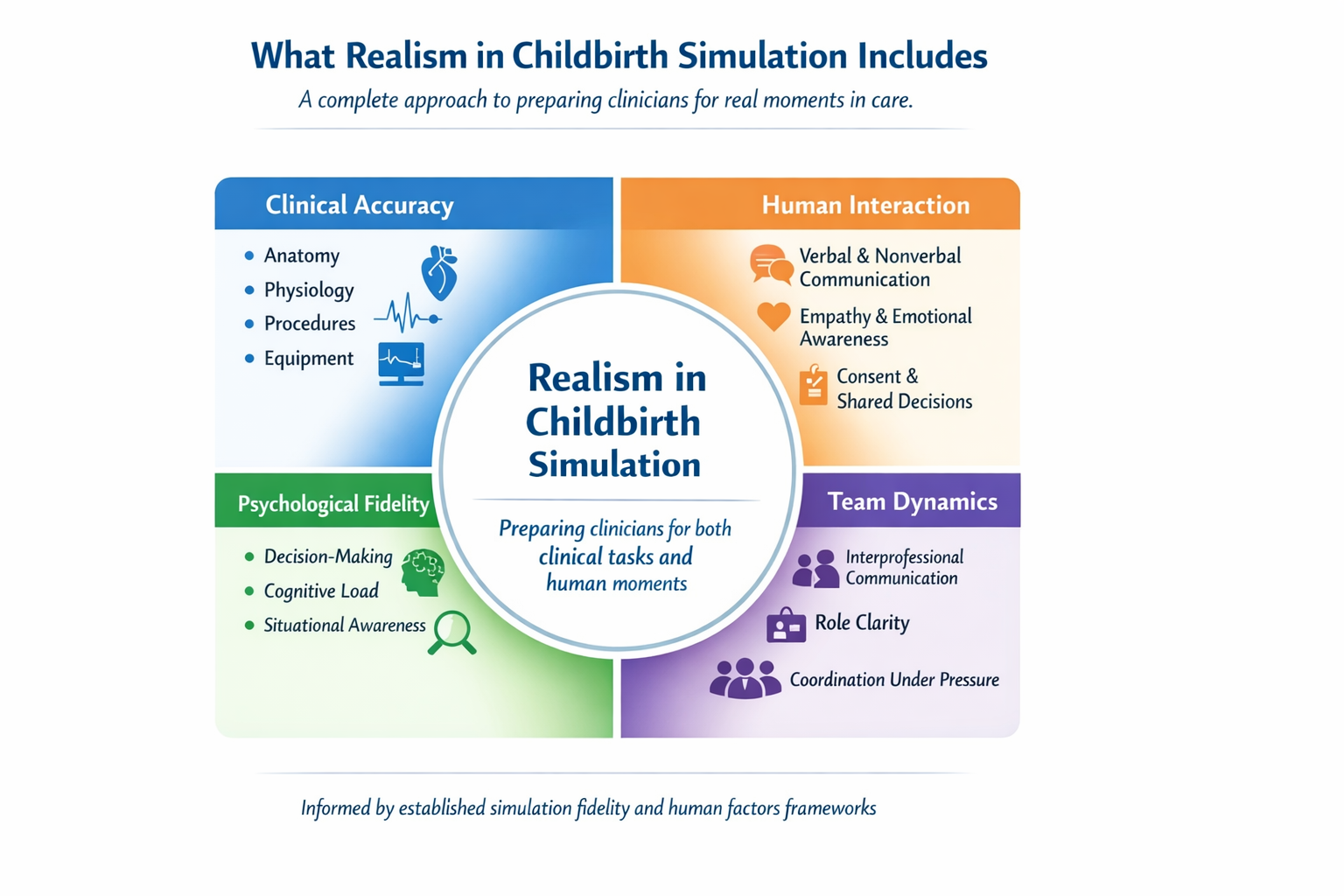
For the purposes of this article, realism is defined as the degree to which a simulation reflects not only clinical tasks and environments, but the human interactions that shape care. This includes how clinicians communicate verbally and nonverbally, how they demonstrate emotional awareness and empathy, how they navigate consent and shared decision-making, and how they remain present and effective during moments of stress and uncertainty.
This definition is not arbitrary. It was developed by synthesizing established simulation fidelity and human factors frameworks, including psychological fidelity, human factors engineering, and simulation as a social practice. Together, these frameworks recognize that effective simulation must engage learners cognitively and emotionally, not just technically.
Specifically, this perspective aligns with: The INACSL Standards of Best Practice: Simulation℠, Dr. David Gaba’s multidimensional fidelity framework, Human Factors and Ergonomics principles in healthcare, Dieckmann’s theory of simulation as social practice.
Taken together, these frameworks support a view of realism that extends beyond physical accuracy. In maternal care, where trust, communication, and emotional presence directly influence patient experience and outcomes, realism must include the human moments that define childbirth itself.
Realism in childbirth simulation is not a single element. It is the integration of clinical accuracy, human interaction, and team-based care.
Evidence: Human-Centered Simulation Improves Communication Skills
Multiple studies demonstrate that simulation using standardized patients improves healthcare learners’ communication and interaction skills.
For example, a comprehensive review of simulation-based medical education found that learners trained through interactive simulation showed measurable improvements in communication, clinical competence, and readiness for patient care. These findings reinforce an important point: communication skills can be taught, practiced, and improved through simulation when human interaction is intentionally included.
Feedback From Simulated Patients Changes Learner Behavior
Human interaction in simulation does more than expose learners to realistic scenarios. It also provides feedback that meaningfully changes clinician behavior.
In one randomized study, feedback from simulated patients led to significant improvements in medical students’ communication skills following training. This kind of feedback helps learners understand not just what they did, but how their words, tone, and presence were experienced.
In childbirth training, this is particularly important. Tone, clarity, and empathy directly influence how patients experience labor, delivery, and care during moments of vulnerability.
Simulation Outperforms Lecture for Communication Training
When comparing teaching methods, simulation consistently outperforms traditional lecture-based education for communication skills.
Research comparing standardized patient role-play with lecture-only instruction found that interactive simulation was more effective in developing communication competencies.In other words, learners gain more when they practice communication in context rather than simply discussing it in theory.
For maternal care, this distinction matters. Real conversations during childbirth are complex, emotional, and time-sensitive. Simulation allows learners to practice navigating those realities before they face them in clinical settings.
Verbal and Nonverbal Communication Can Be Trained
Simulation that includes real human interaction helps learners develop both verbal and nonverbal communication behaviors.
Studies show that simulation influences how clinicians use body language, eye contact, and tone, all of which are critical in high-stress, emotionally charged environments like childbirth, where reassurance and presence can be just as important as clinical intervention.
These skills form the foundation of trust during labor and delivery and are difficult to develop through technical training alone.
Team Communication and Human Factors in Maternal Care
Childbirth is inherently team-based. Nurses, physicians, anesthesiologists, and support staff must work together seamlessly, often under pressure.
Simulation-based team training has been shown to improve communication, collaboration, and shared understanding among healthcare professionals. Evidence also demonstrates that interprofessional simulation strengthens human factor skills that directly influence patient safety and care quality.
As a result, training clinicians to interact effectively with both patients and colleagues is essential in maternal care.
Human-Centered Simulation Builds Confidence and Self-Efficacy
Beyond skills and communication, human-to-human simulation improves learner confidence.
Research indicates that standardized patient simulation increases self-efficacy, supporting better decision-making and clinical performance in real-world settings. Confidence is especially critical in childbirth, where providers must remain calm, present, and communicative during moments of uncertainty and stress.
Confidence is especially critical in childbirth, where providers must remain calm, present, and communicative under pressure.
Why Human-Centered Simulation Matters in Maternal Care
Human-centered simulation prepares clinicians to manage the realities of childbirth, including:
- Communicating during uncertainty
- Responding to emotional distress
- Supporting informed decision-making
- Coordinating care across teams
These are not “soft skills.” They are essential competencies supported by evidence.
How Avbirth and Avcath Support Realism During the Maternal Moments That Matter
If realism in childbirth simulation is defined by how well training prepares clinicians for real human moments, then the tools used in simulation must support clinical accuracy and human connection at the same time. One without the other falls short of what providers actually face in maternal care.
This is where wearable simulation solutions like Avbirth and Avcath play an important role.
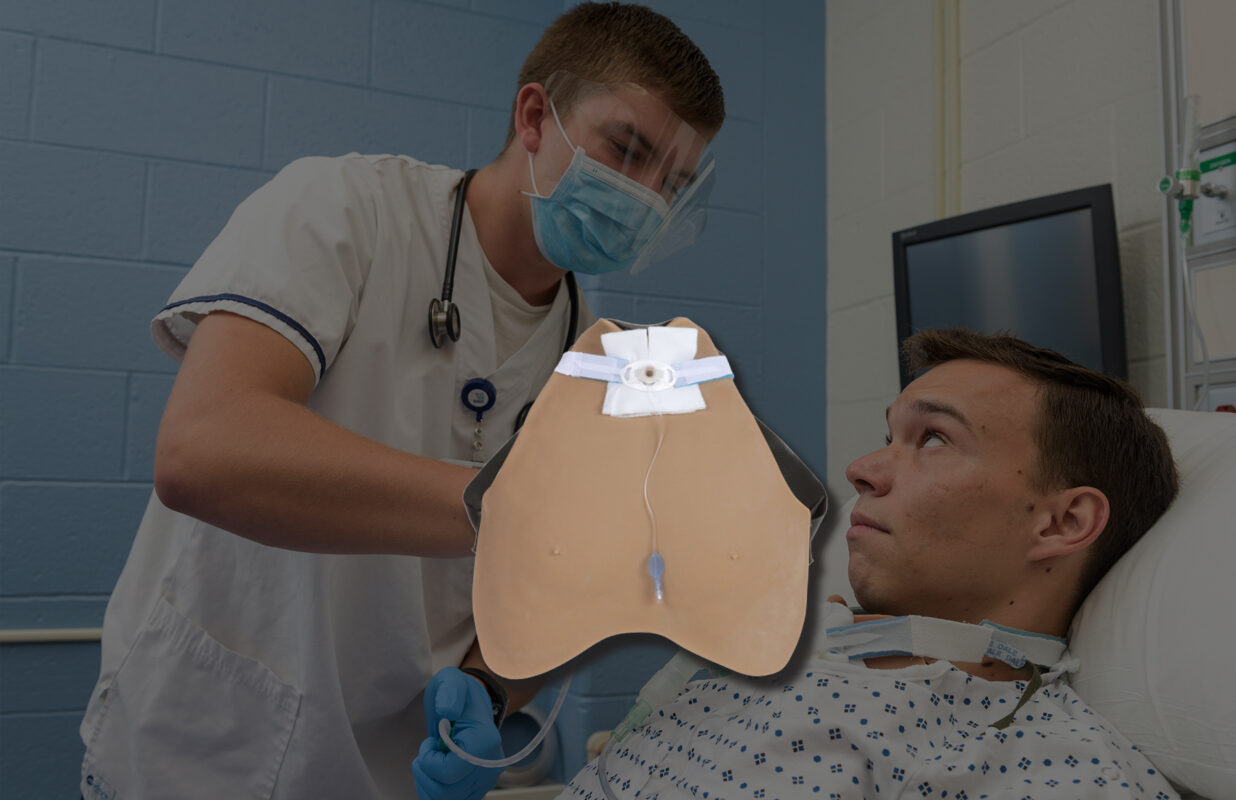
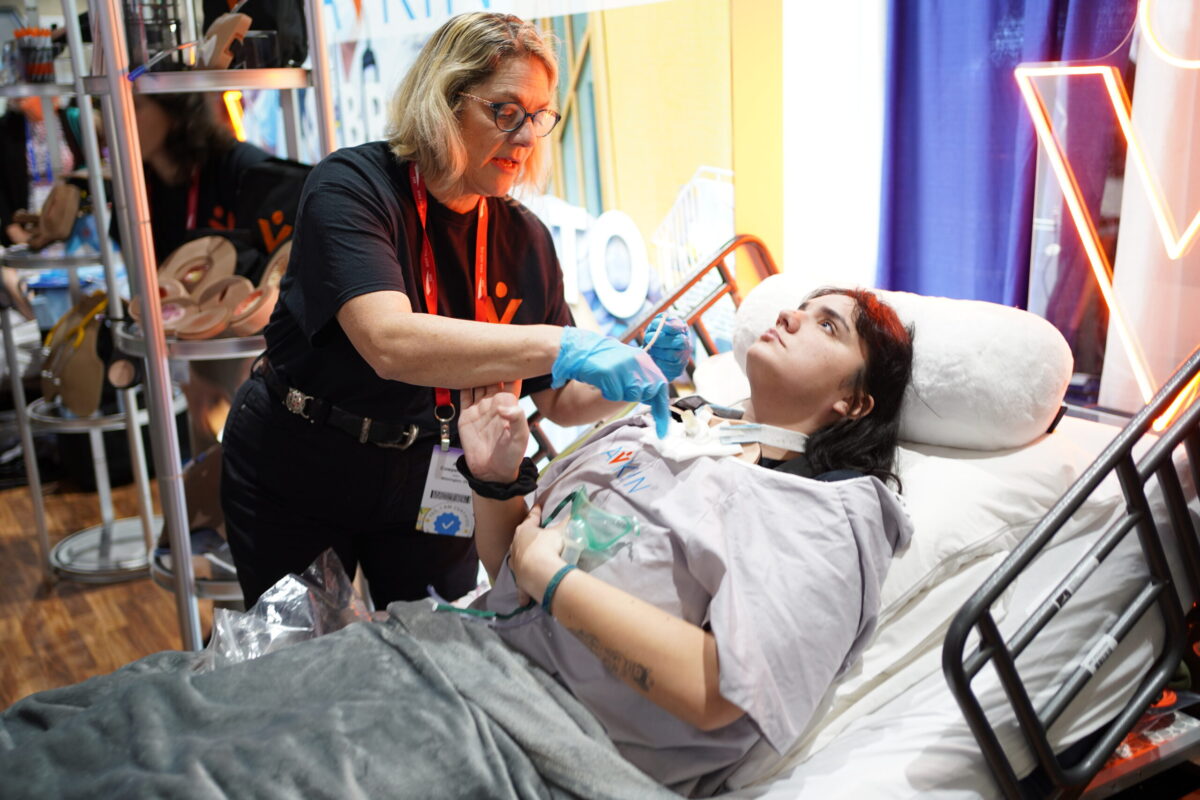
Rather than separating technical skills from communication and presence, Avbirth and Avcath are designed to integrate seamlessly into human-centered scenarios. Because they are worn by real people, learners must engage with a person, not just a task, throughout the simulation experience. Communication, consent, and emotional awareness are not add-ons. They are part of the scenario by design.
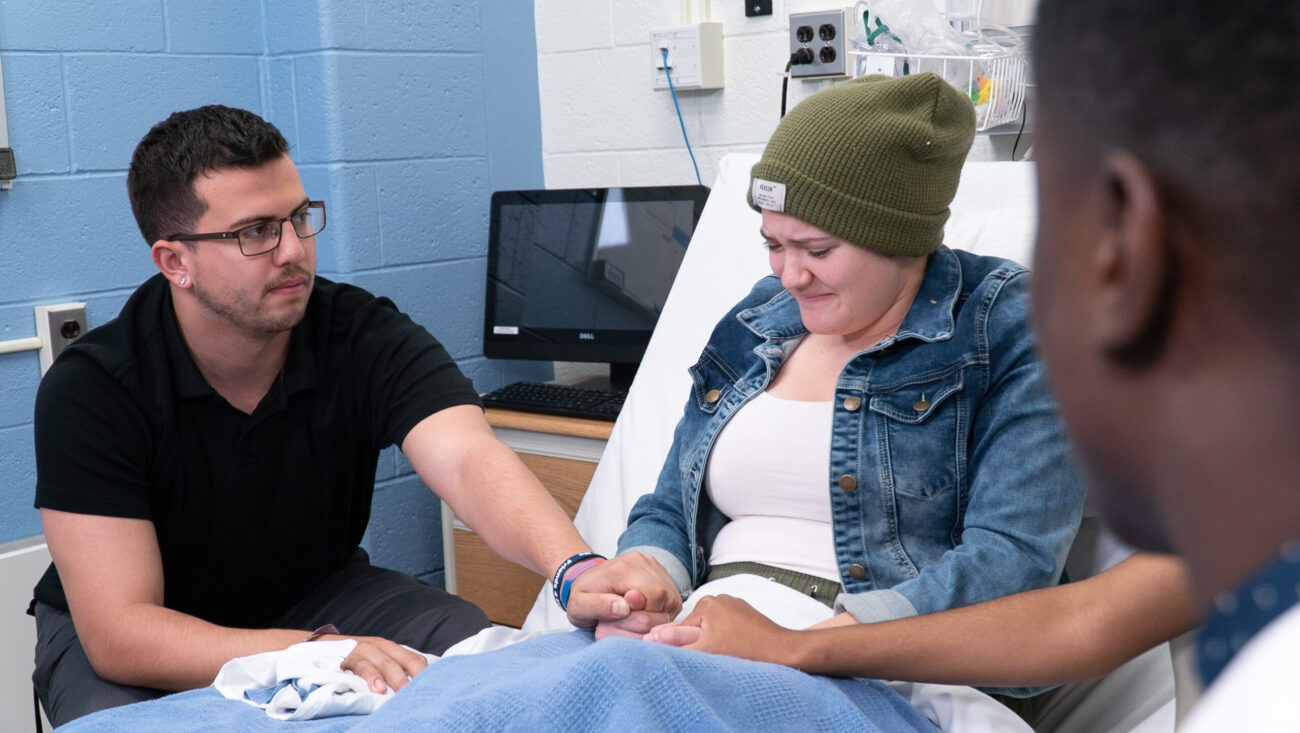
With Avbirth, clinicians practice critical obstetric skills while responding to verbal cues, emotional reactions, and real-time communication from a laboring patient. Learners explain what they are doing, obtain consent, provide reassurance, and remain present during moments of uncertainty. These interactions mirror the real moments that shape how patients experience childbirth and remember their care.
Avcath supports the same realism during procedures that are often treated as purely technical. Learners practice catheterization while navigating dignity, discomfort, and patient questions in real time. Instead of focusing only on placement technique, they must consider how they speak, how they explain the procedure, and how they respond when a patient is anxious or in pain. This reinforces an essential truth in maternal care: technical accuracy and human interaction are inseparable.
Realism When Minutes Matter: Postpartum Hemorrhage in Mobile Simulation
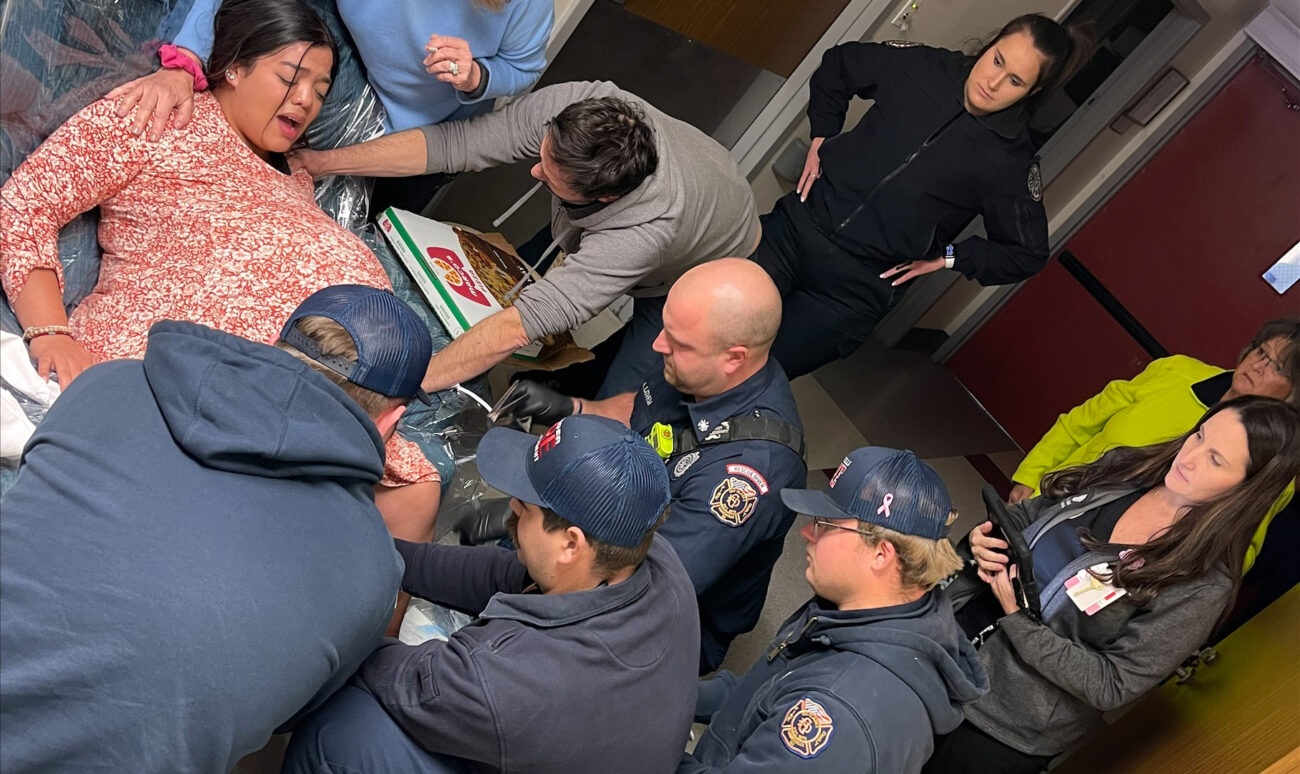
That integration becomes especially clear in high-stakes scenarios like postpartum hemorrhage. At Northeast Georgia Medical Center’s mobile simulation program, Avcath became a primary tool for training teams in postpartum hemorrhage management. In a mobile environment where scenarios run back-to-back and realism matters, Avcath allowed teams to practice rapid intervention while still communicating with a patient, coordinating as a team, and managing the emotional intensity of the moment. The focus wasn’t just on stopping blood loss. It was on how care unfolds when minutes matter and human connection cannot disappear.
Together, Avbirth and Avcath support realism by allowing learners to:
-
Practice technical skills within authentic human interaction
-
Communicate and obtain consent naturally during procedures
-
Exercise emotional awareness and presence alongside clinical decision-making
-
Coordinate as a team around a patient, not a device
In the context of maternal moments that matter, this integrated approach helps bridge the gap between performing a procedure correctly and delivering care that feels safe, respectful, and human. By keeping a real person at the center of simulation, Avbirth and Avcath help prepare clinicians for the full reality of childbirth, not just the mechanics of it.
Final Takeaway: Realism Is Human
Realism in childbirth simulation is not defined by technology alone. It is defined by how well training prepares clinicians for real human moments.
Simulation that prioritizes human-to-human interaction strengthens communication, confidence, and care quality. The research is clear: training that reflects the human experience of childbirth leads to better-prepared providers and more meaningful maternal care.