Blog
Can Healthcare Students Learn Empathy?

Can Healthcare Students Learn Empathy?
Empathy is often viewed as something that develops over time. It comes from years of caring for patients, navigating difficult conversations, and learning to understand what someone is feeling beyond the diagnosis in front of you. Many healthcare professionals believe it simply comes with experience.
But what if we didn’t have to wait?
What if healthcare education could intentionally create experiences that help students develop empathy before they ever care for a real patient?
Simulation has long been recognized for helping students build clinical competence. It teaches assessment skills, strengthens critical thinking, and allows learners to make mistakes in a safe environment before entering clinical practice. Yet technical competence is only one part of becoming a great healthcare provider.
Patients rarely remember every procedure they receive. They remember how they were treated. They remember whether someone explained what was happening, listened to their concerns, or helped them feel safe during a vulnerable moment.
Research suggests those communication skills can be intentionally developed. A recent study found that medical students who actively participated in role-playing demonstrated significantly higher levels of empathy and perspective-taking than students who only imagined the same scenarios. Empathic concern increased from 3.51 to 3.94, while perspective-taking improved from 4.11 to 4.36 after students physically stepped into the roles of both patient and caregiver.
Seeing Through the Patient’s Eyes
When I spoke with Nicole Rowe, Director of Allied Health at Gogebic Community College, one theme stood out throughout our conversation.
Students need opportunities to experience healthcare from the patient’s perspective.
“The ability to develop empathy and put yourself in a patient’s shoes really helps students understand a patient’s fears, anticipate the questions they may have, and appreciate how it feels to be on the receiving end of care,” Rowe explained.
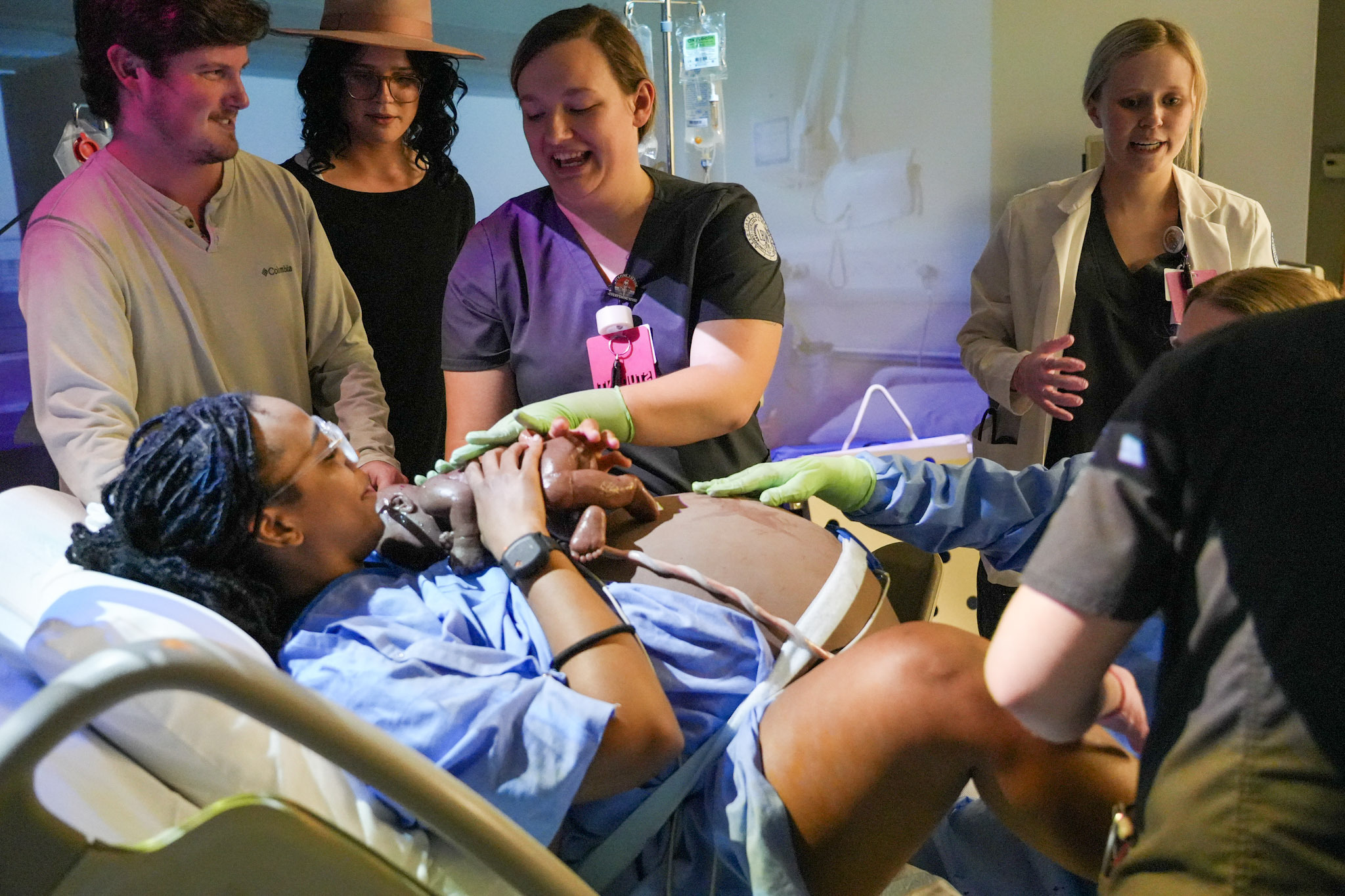
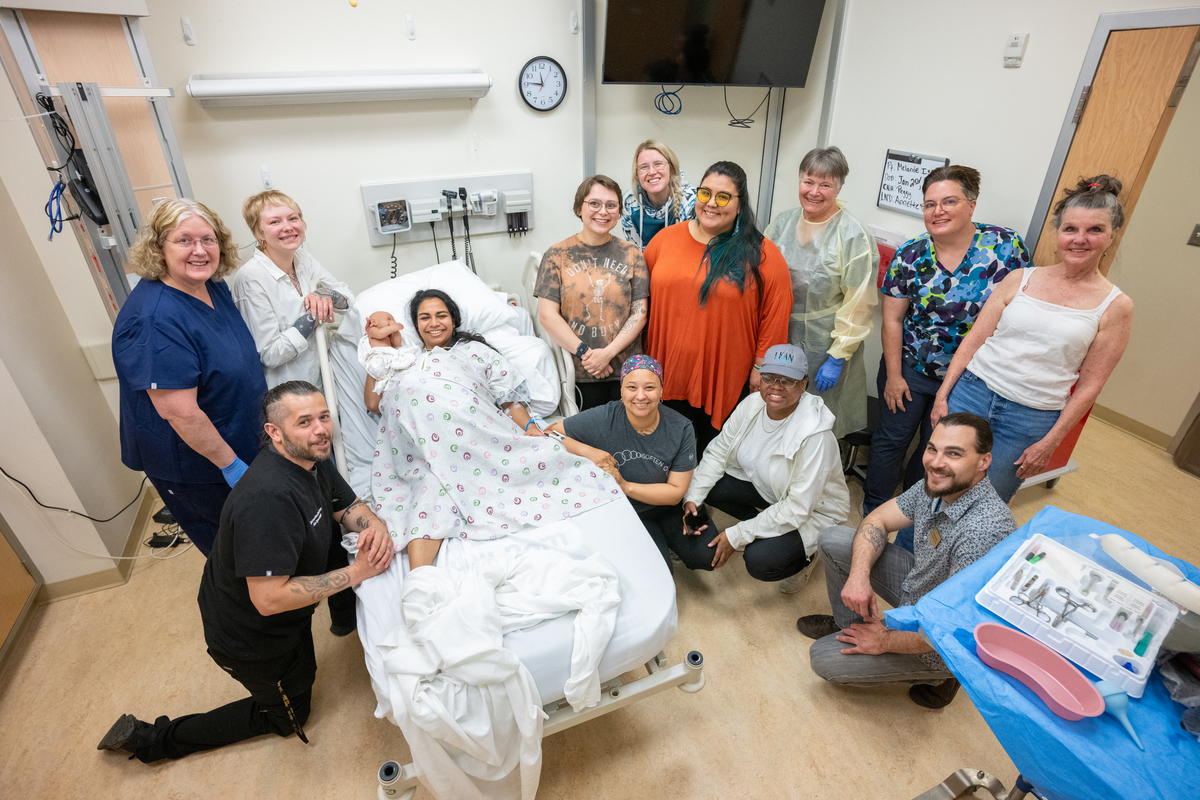
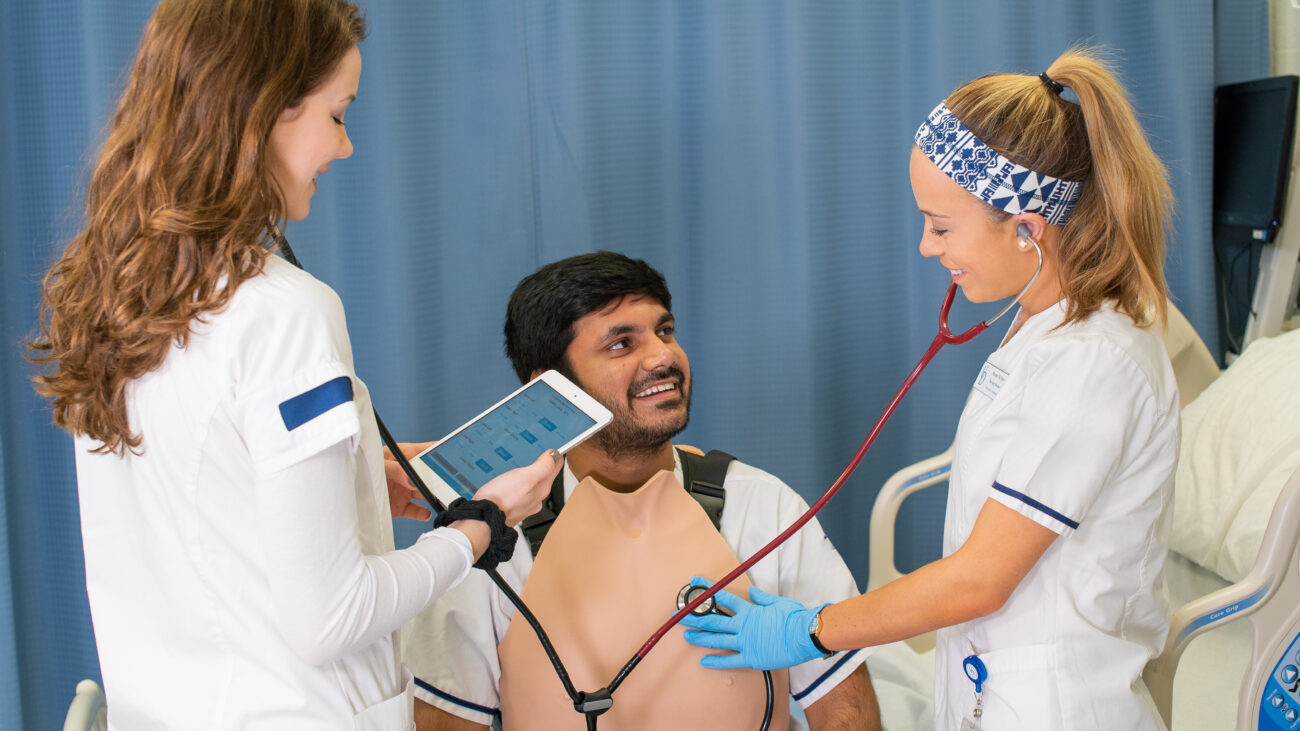
That philosophy shapes the way Gogebic approaches simulation. Students rotate through the roles of clinician, observer, family member, and patient while working with peers, standardized patients, wearable simulators, and manikins. Rather than focusing solely on performing a procedure correctly, they learn to communicate, explain their actions, and understand what it feels like to receive care.
“We do a lot of hands-on formative simulations,” Rowe said. “We want students to be able to talk through different processes and different patient care situations to make sure that they feel comfortable with patient care and being able to ask questions.”
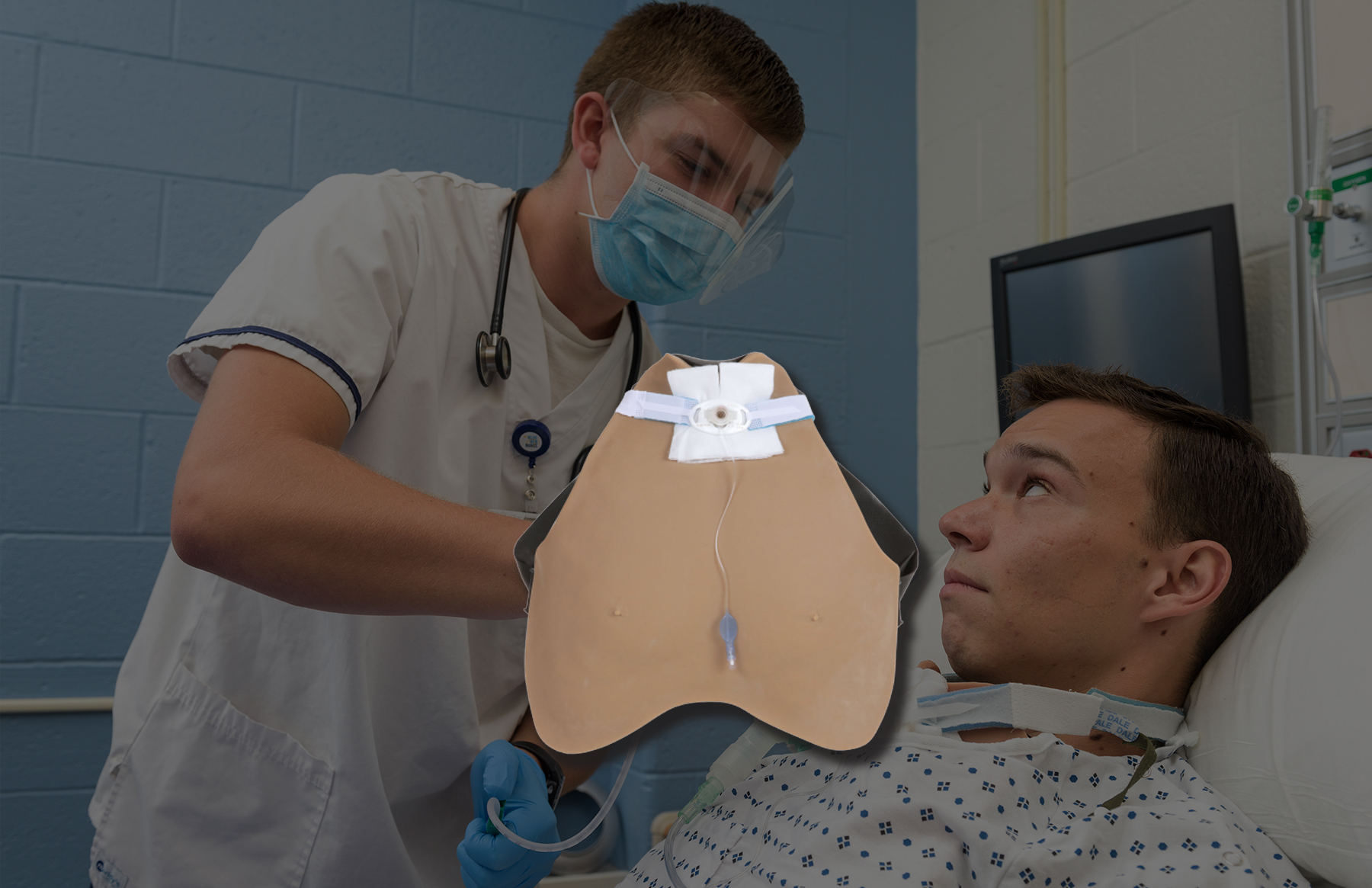
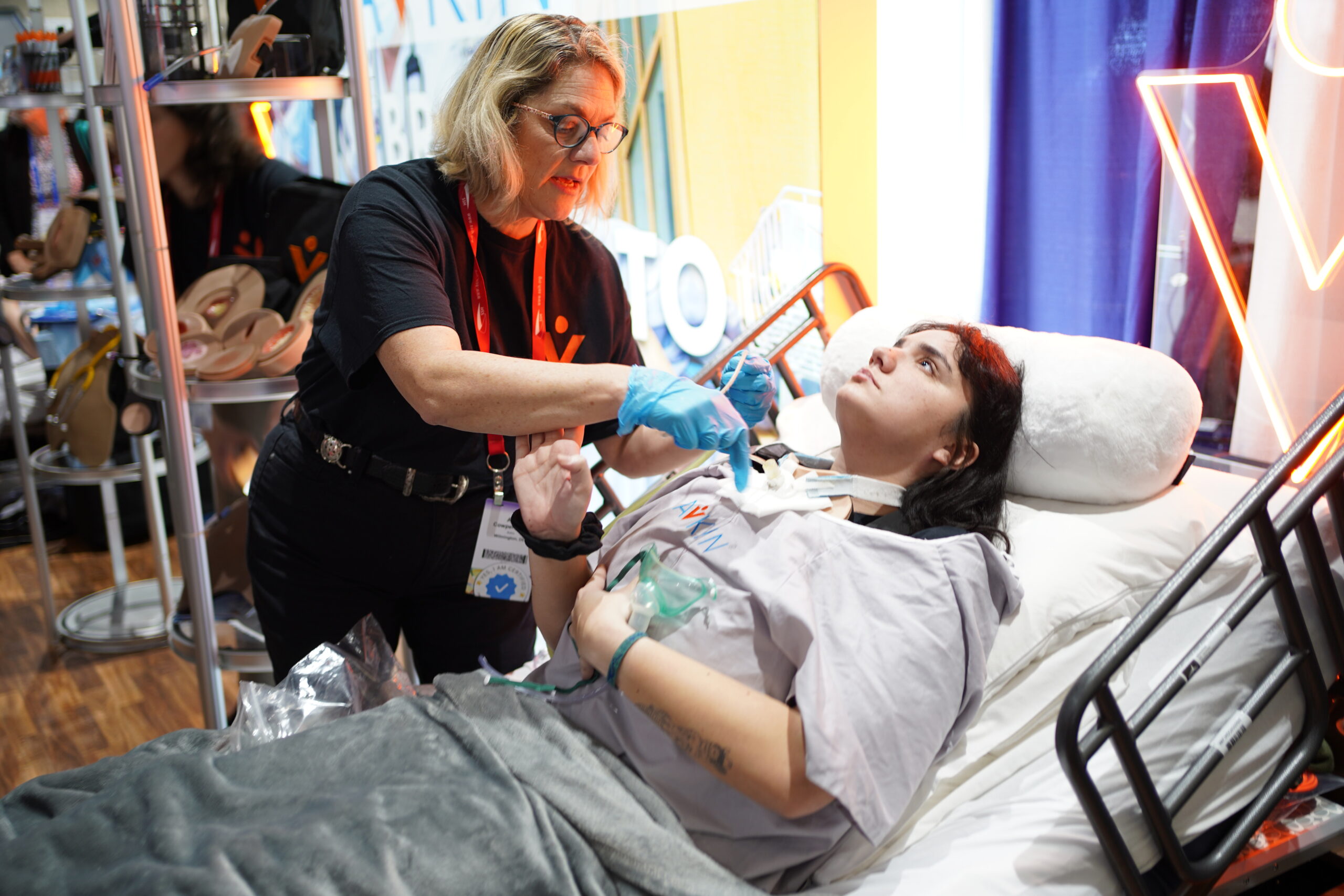
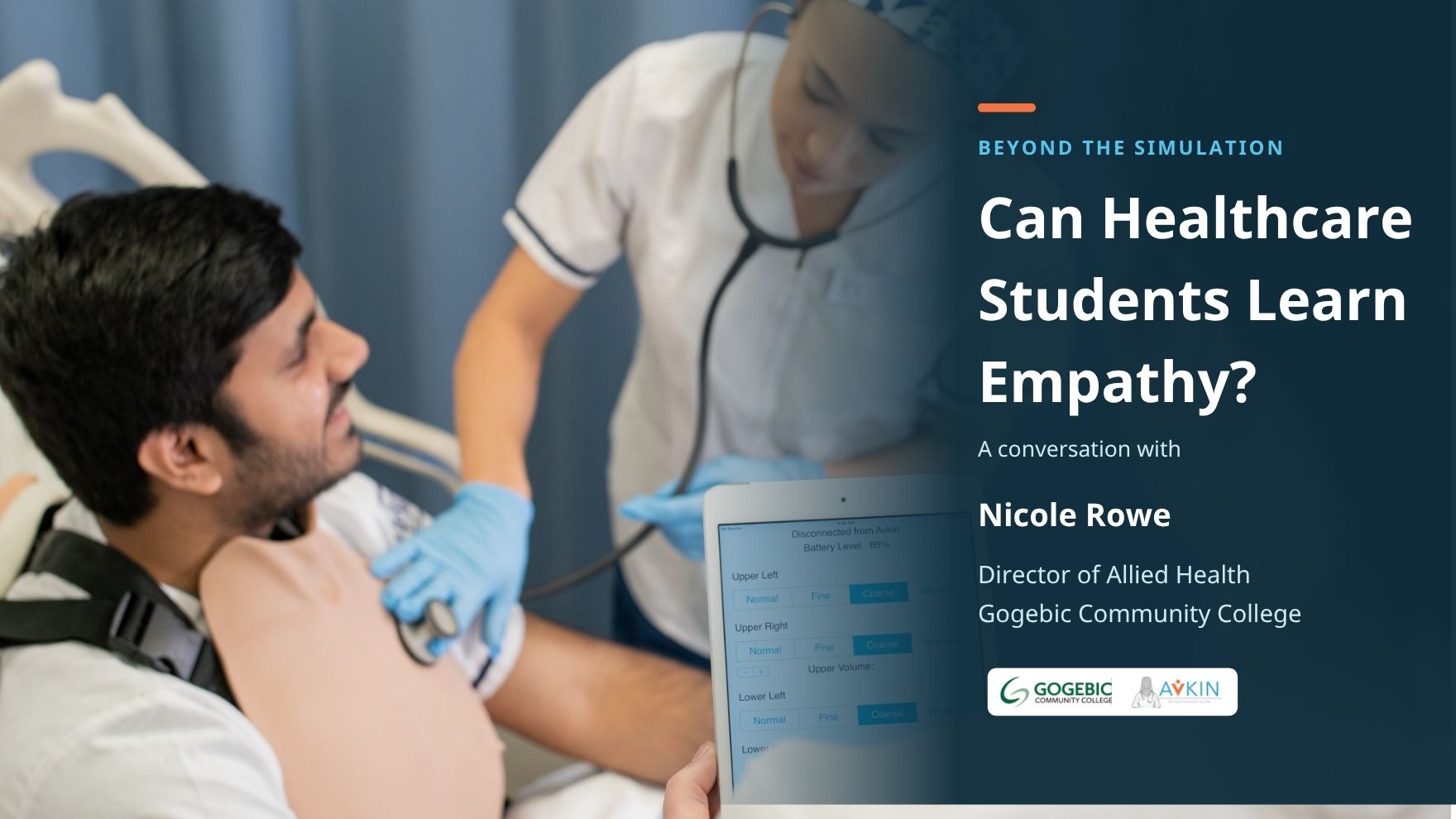
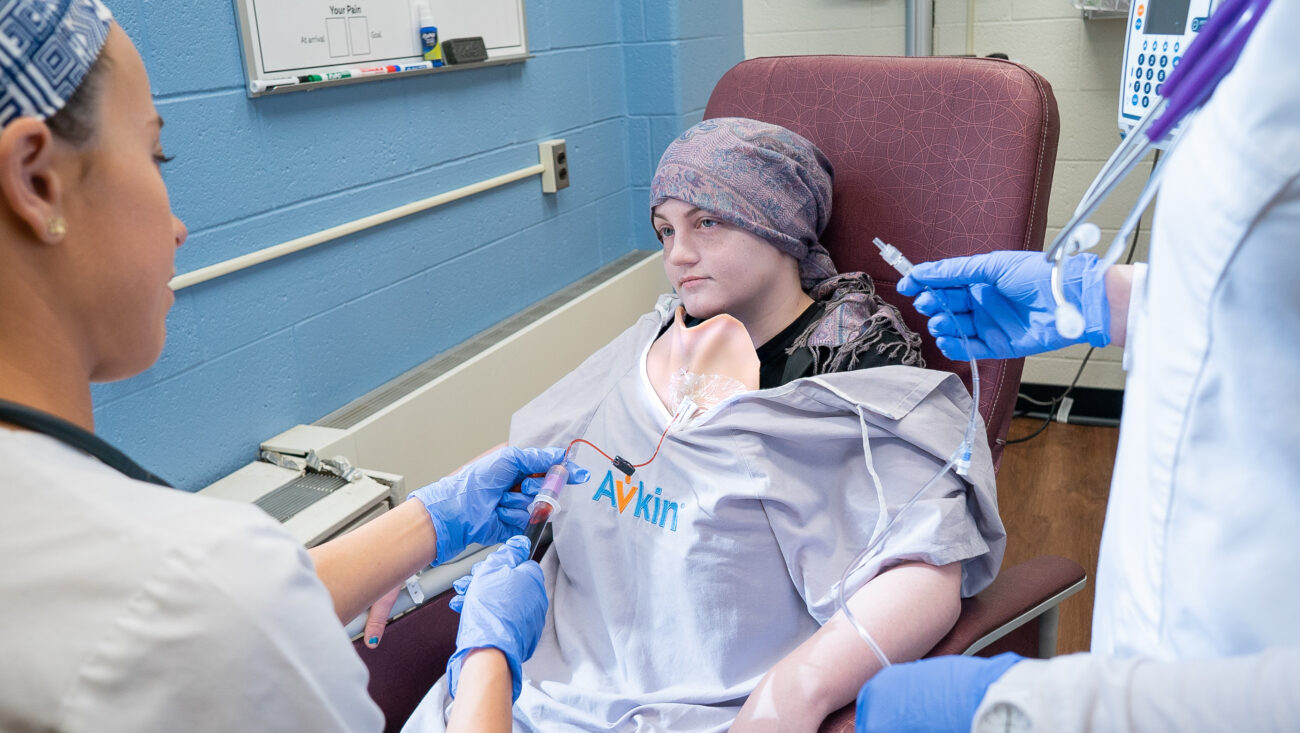
One way Gogebic has expanded those opportunities is through the use of Avkin Wearable Simulators. Products like the Avtrach® allow one student to perform tracheostomy care while another assumes the role of the patient. The experience immediately becomes more realistic because students aren’t practicing on a manikin—they’re interacting with another person who may be anxious, uncomfortable, or unable to communicate verbally.
That simple change shifts the focus from completing a task to caring for a person.
Students must explain each step before beginning, provide reassurance throughout the procedure, and recognize when a patient may need encouragement or clarification. Research supports that approach, showing students become more engaged when they actively participate in role-playing rather than simply imagining the experience. Greater engagement was directly associated with higher empathy and stronger perspective-taking.
Learning That Lasts
Simulation also provides students with something equally valuable: the opportunity to build confidence through hands-on experience. According to Rowe, some of the most memorable lessons happen during students’ first simulation experiences. Students encounter realistic scenarios that challenge them to think critically, apply their knowledge, and refine their skills in a supportive learning environment. Through reflection and feedback, they develop habits and decision-making skills that carry forward into clinical practice. “The second time they do it, they don’t forget,” she said.
More Than Technical Skills
Healthcare has always been about more than treating a diagnosis. Behind every procedure is a person who may be frightened, uncertain, or overwhelmed. Preparing students for those moments requires more than teaching clinical skills—it requires helping them understand what it feels like to receive care.
That is where simulation offers something uniquely valuable.
When students step into the role of the patient, they experience vulnerability firsthand. They depend on someone else to explain a procedure, answer their questions, and help them feel safe. Those moments encourage students to look beyond the task in front of them and consider the person experiencing it. Instead of asking, Did I perform the procedure correctly? they begin asking, Did my patient understand what I was doing? Did I communicate clearly? Did I build trust?
The research supports what educators like Nicole Rowe witness in their simulation labs every day. Students who actively participated in immersive role-playing demonstrated significantly greater empathy and perspective-taking than those who simply imagined the same scenarios. Researchers also found that learners became more engaged when they physically assumed the roles of patient and caregiver, and that increased engagement was directly associated with stronger empathy and perspective-taking.
Those findings reinforce an important idea: empathy isn’t developed by observation alone. It grows through experience, reflection, and meaningful human interaction. By creating opportunities for students to see healthcare through the patient’s eyes, simulation helps future clinicians build communication skills, strengthen compassionate care, and better understand the people they will serve.
Can healthcare students learn empathy?
The evidence suggests they can. More importantly, healthcare educators have the opportunity to intentionally cultivate it. Every simulation that encourages students to step into another person’s shoes helps prepare them not only to perform procedures with confidence, but to care for patients with greater understanding, compassion, and humanity.
Curious how role play and wearable simulators could fit in your program? Sit down with our experts to get a curriculum assessment.