Perkins Funding for Healthcare Simulation Programs (2026 Guide)

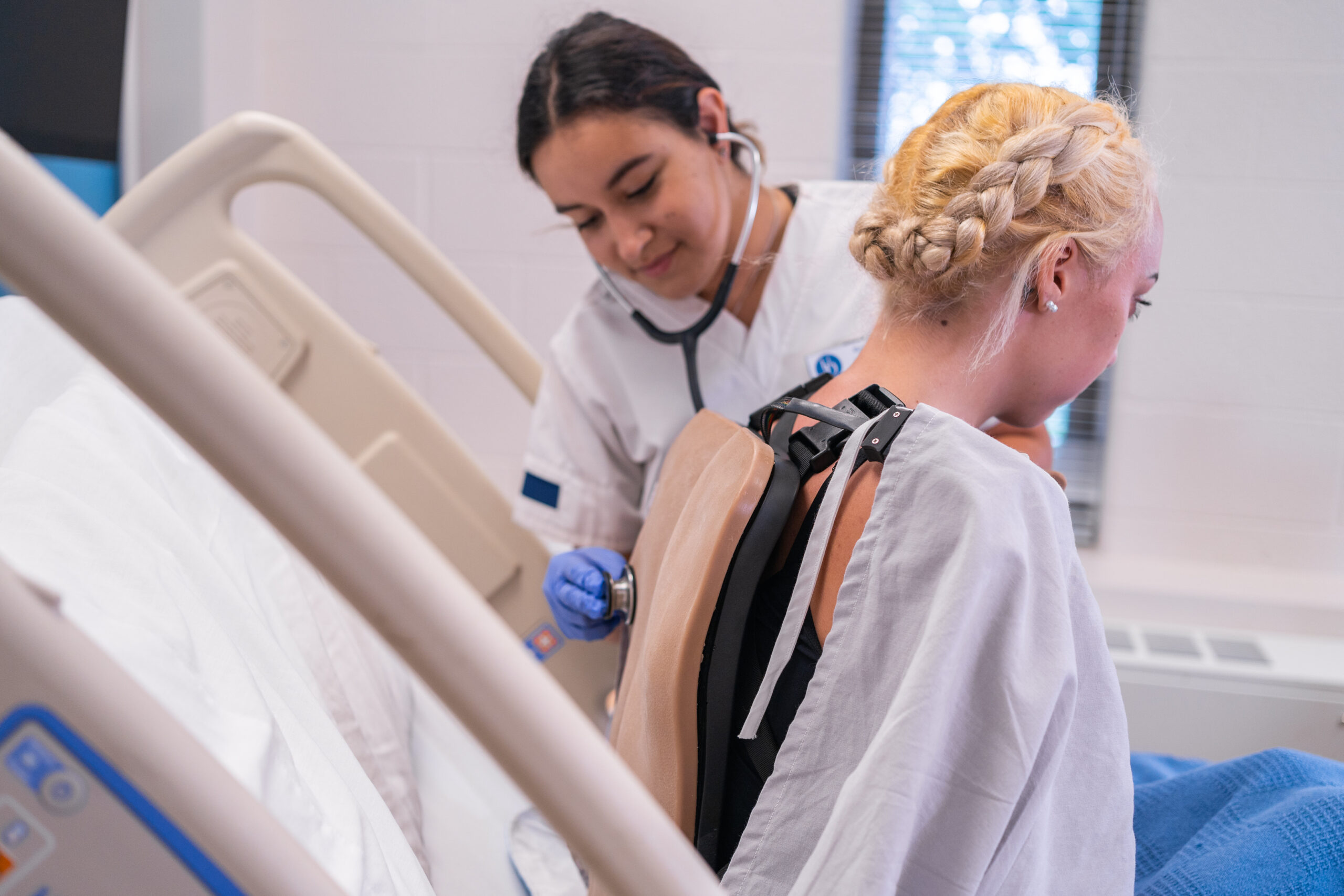
The Carl D. Perkins Career and Technical Education Act, commonly known as Perkins funding, is a federal funding program designed to strengthen Career and Technical Education (CTE) at the secondary and postsecondary levels. Its purpose is simple: ensure students graduate with the skills, experience, and credentials required for today’s high-demand careers.
For healthcare education programs, Perkins funding is increasingly used to support healthcare simulation, standardized patient programs, and hands-on training technology that prepares learners for real clinical environments.
This guide explains how Perkins funding works in 2026, who qualifies, and how healthcare simulation programs can position themselves for funding success.
To make it easier to navigate, you can jump directly to each section below:
- What Is Perkins Funding?
- Who Qualifies for Perkins Funding?
- What Perkins Funding Can Be Used For in Healthcare Simulation
- How Do Institutions Apply for Perkins Funding?
- Where Should Programs Start?
- How Can a Perkins Application Stand Out?
- What Happens After Funding Is Secured?
- Justifying Avkin Products
1. What is Perkins Funding?
Perkins funding is federal financial support allocated to states and distributed locally to eligible CTE programs. The funding is governed under Perkins V, which remains in effect in 2026.
The goal of Perkins funding is to:
- Improve the quality of career and technical education programs
- Align training with regional workforce needs
- Prepare learners for licensure, certification, and employment in high-demand fields such as healthcare
Healthcare pathways including nursing, allied health, EMS, and clinical support roles are commonly supported under Perkins when they meet state CTE definitions.
2. Who Qualifies for Perkins Funding?
Eligibility for Perkins funding is determined at the state and local level, based on how each state defines and administers its CTE programs.
Eligible institutions commonly include:
- Community and technical colleges
- High schools offering approved healthcare career pathways
- Universities with programs formally designated as CTE-aligned under state guidelines
To qualify, healthcare programs typically must:
- Prepare students for healthcare careers, certifications, or licensure
- Demonstrate alignment with regional workforce needs
- Emphasize hands-on, skills-based training
Simulation programs that support clinical competency, decision-making, and communication skills often align well with these requirements.
3. What Perkins Funding Can Be Used For in Healthcare Simulation
Perkins funds can support a wide range of activities related to healthcare simulation and workforce preparation, including:
- Simulation equipment and technology
- Wearable simulators
- Task trainers
- Simulation tools that support realistic, hands-on learning
- Program development or improvement
- Expanding simulation capacity
- Enhancing skills-based training pathways
- Faculty and educator professional development
- Training instructors to effectively run simulation-based education
- Partnerships
- Collaboration with healthcare employers, workforce boards, and community organizations
- Student support services
- Career exploration
- Academic and career advising tied to healthcare pathways
The strongest Perkins-funded simulation programs clearly connect technology purchases to workforce readiness and learner outcomes, not just equipment acquisition.
4. How Do Institutions Apply for Perkins Funding?
The Perkins funding process follows a clear structure from federal authorization to local program funding. The graphic below outlines how institutions typically move through the process.
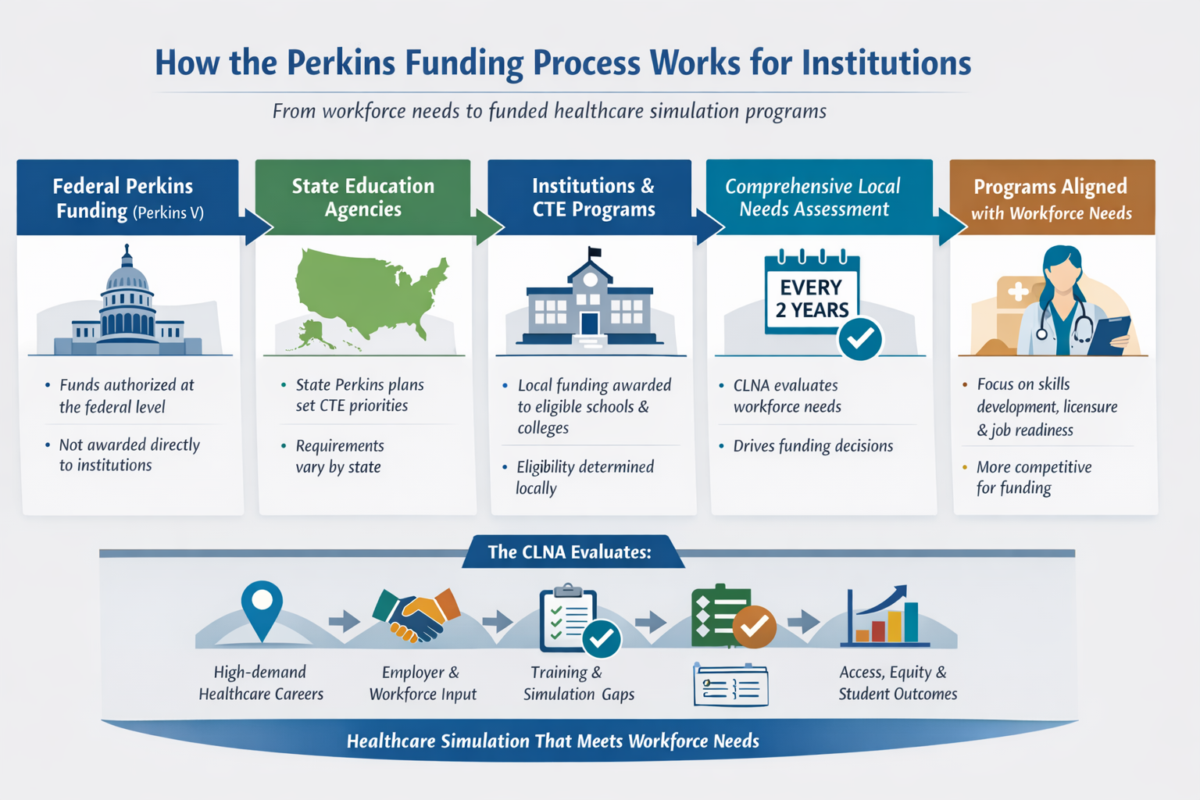
Institutions do not apply directly to the federal government. Instead, funding flows through state Perkins plans and is awarded to local eligible recipients.
A required step in the process is completing a Comprehensive Local Needs Assessment (CLNA) every two years. The CLNA helps ensure that Perkins funding addresses real workforce needs within a region.
The CLNA process typically includes:
- Identifying high-demand healthcare careers in your region
- Engaging local healthcare employers and workforce boards
- Evaluating gaps in current training programs
- Assessing access, equity, and student outcomes
Programs that clearly demonstrate how simulation supports these needs are better positioned for funding.
5. Where Should Programs Start?
Before pursuing Perkins funding, institutions should conduct an internal needs assessment focused on their healthcare training programs.
Key questions to consider include:
- Where are the current gaps in skills training?
- What workforce data supports the need for expanded simulation?
- What outcomes are we trying to improve?
- Which healthcare partners support our program?
- What simulation tools are needed to meet learner and employer expectations?
Clear answers to these questions strengthen both CLNA submissions and local funding requests.
6. How Can a Perkins Application Stand Out?
Successful Perkins applications often demonstrate:
- Strong partnerships with healthcare employers
- Alignment with regional workforce priorities
- Data-driven justification for equipment and program investments
- A focus on skills competency, patient safety, and job readiness
Simulation programs that integrate technical skill development with communication, teamwork, and decision-making are particularly well-aligned with Perkins priorities.
7. What Happens After Funding Is Secured?
Perkins funding includes strict accountability requirements. Institutions must:
- Track and report performance metrics such as enrollment, completion, and employment outcomes
- Meet federal and state performance standards
- Evaluate program effectiveness and make ongoing improvements
Simulation programs funded through Perkins should be prepared to demonstrate how training investments translate into workforce-ready graduates.
Perkins funding offers a valuable opportunity to strengthen healthcare simulation programs when funding requests are grounded in workforce needs, learner outcomes, and hands-on skills development. Programs that position simulation as a core component of clinical readiness, rather than a supplemental tool, are best positioned to succeed.
Justifying Avkin products for Perkins funding 2026? Our solutions team can help!