Blog
The Healthcare Simulation Funding Challenge Facing Programs Everywhere — And How Inver Hills Pushed Beyond It

Across the country, simulation centers are facing a growing challenge: how do you continue building immersive, high-quality healthcare education programs when funding for healthcare simulation remains uncertain?
For many simulationists and simulation operations teams, budgeting feels like navigating shifting ground. Questions around annual allocations, long-term sustainability, and purchasing authority continue to create barriers for programs trying to expand beyond traditional manikin modalities.
Yet despite these challenges, some institutions are finding ways not just to survive — but to lead.
Inver Hills Community College in Minnesota is one of them.
Building Beyond Limitations
Like many healthcare education programs, Inver Hills had a vision for a more immersive, interdisciplinary simulation program. They understood that the future of healthcare education would require more than static manikins and isolated technical skill training. They wanted students to experience communication, collaboration, emotional intelligence, and clinical realism together.
The challenge was funding for healthcare simulation technology.
Rather than allowing financial uncertainty to limit their goals, the team at Inver Hills took a different approach. They pursued Congressionally Directed Spending (CDS) opportunities and worked intentionally to secure funding that could transform the future of their program.
Their vision extended far beyond purchasing equipment.
Through a standardized patient mentorship initiative with Avkin, the college invested in building the foundation for a long-term, sustainable standardized patient program while simultaneously introducing wearable simulation technology designed to maximize immersive learning opportunities across departments.
The result was not simply a simulation equipment upgrade — it was the beginning of a broader institutional transformation.
A Demonstration That Changed Perspectives
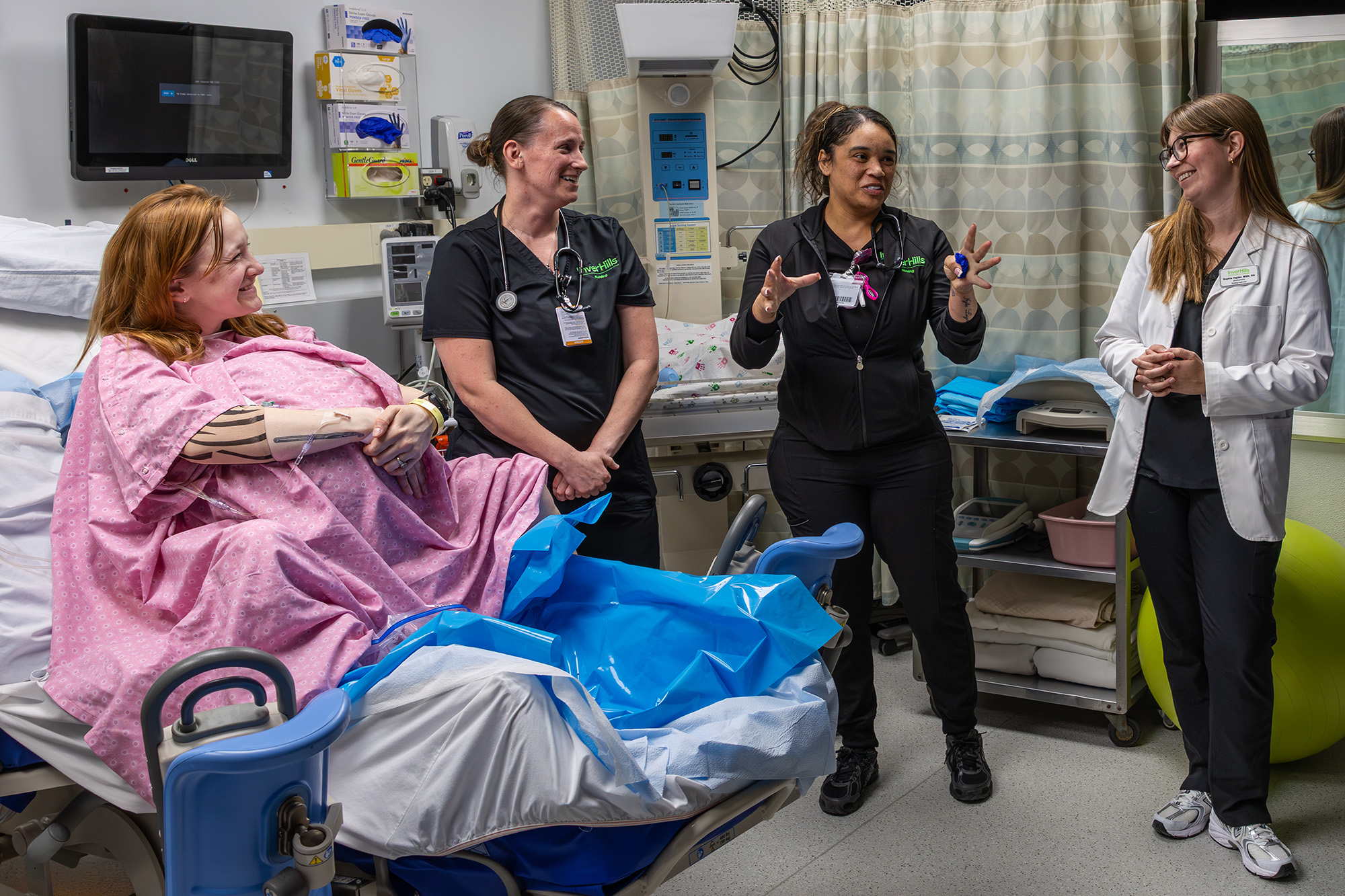
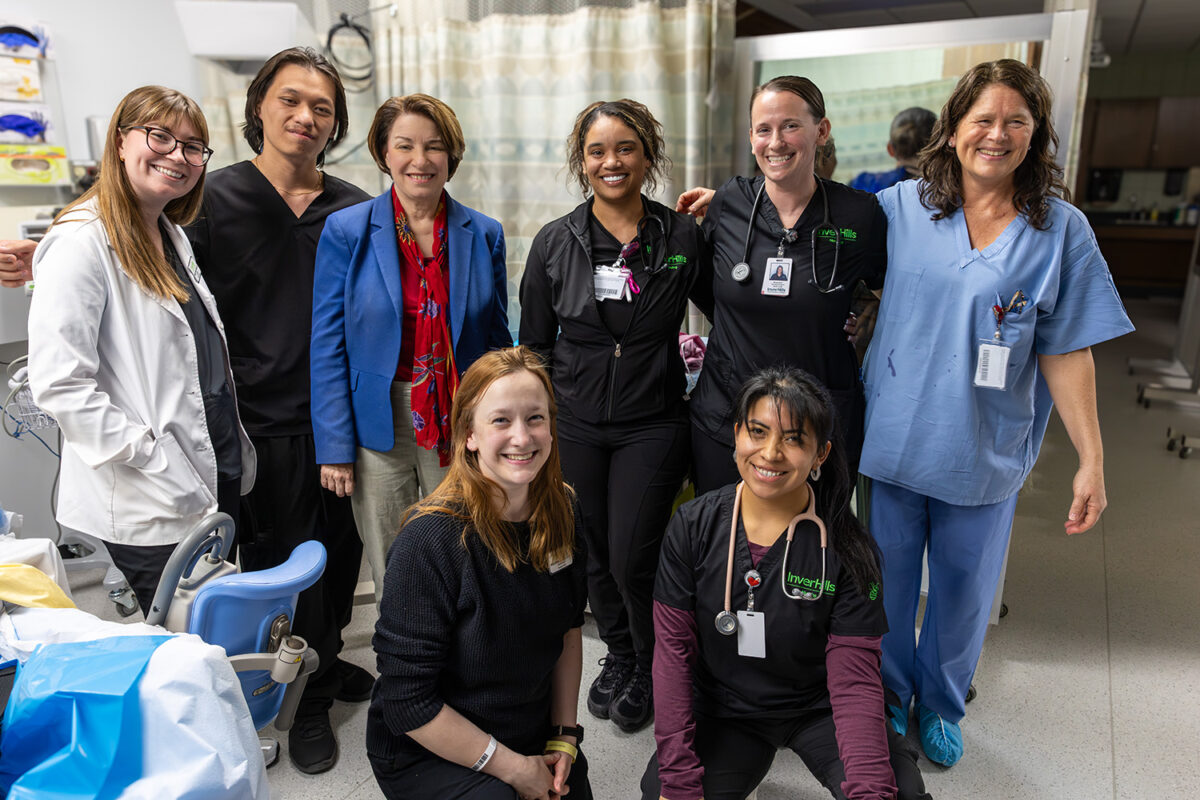
After securing funding, Inver Hills leadership wanted to showcase the impact of the investment to Sen. Amy Klobuchar and college leadership. One of the featured technologies was the Avbirth wearable birthing simulator from Avkin, funded through the Congressionally Directed Spending initiative.
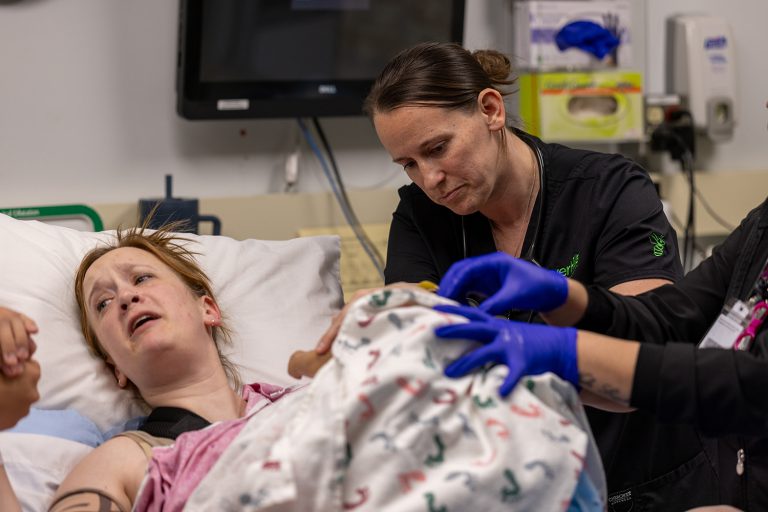
With a short turnaround time, simulation faculty quickly unboxed the technology, trained faculty members to portray the birthing patient, and prepared a fully immersive labor and delivery simulation demonstration.
What happened next left a lasting impression.
Before the scenario began, attendees admitted it was difficult to fully imagine what wearable simulation would look like in practice. But once the simulation started, the room shifted.
The realism of a live standardized patient wearing the simulator transformed the experience from observation into immersion. Participants became emotionally invested in the scenario, reacting not just to technical procedures, but to the human interaction unfolding in front of them.
Leadership at the college — along with Sen. Klobuchar — were reportedly blown away by the experience and the level of realism students would now be able to access.
It was more than technology.
It was a glimpse into the future of healthcare education.
A Vision Bigger Than Equipment
JT Bealka, Academic Dean of Healthcare at Inver Hills Community College, believes this movement is about much more than purchasing new tools.
“What we are building is much bigger than a new set of tools. It is a broader vision for inter-professional healthcare simulation that strengthens learning, deepens skills training, and better prepares students for the realities of today’s healthcare workforce. This work reflects the creativity, commitment, and forward-thinking spirit of our college community, and it is exciting to see that vision already taking shape in such meaningful ways.”
That philosophy is becoming increasingly important as healthcare education evolves.
Programs leading the next era of simulation are not simply investing in equipment — they are investing in experiences that reflect real patient interaction, interdisciplinary collaboration, and emotionally intelligent care delivery.
Wearable simulation and standardized patient integration are rapidly becoming part of that conversation.
Why Forward-Thinking Programs Are Embracing Wearables
Healthcare simulation is shifting toward modalities that prioritize realism, communication, and human connection.
Wearable simulators allow learners to interact with live people while still practicing high-acuity clinical scenarios. This creates opportunities for students to strengthen technical skills while simultaneously developing therapeutic communication, empathy, teamwork, and clinical judgment.
At Inver Hills, faculty and students have embraced the transition enthusiastically.
“Faculty and students have embraced these new learning experiences and the innovative technology with such energy, openness, and professionalism,” shared the Inver Hills team.
Programs embracing these immersive approaches are often becoming centerpieces during campus tours, attracting attention from prospective students, faculty, and institutional leadership alike. Simulation spaces are increasingly viewed not just as educational tools, but as strategic enrollment and program differentiation assets.
Funding Innovation Requires Leadership
The challenge of simulation funding is not new.
Across undergraduate nursing education, there is growing pressure to establish sustainable operational budgets for simulation programs rather than relying heavily on grants and one-time funding sources. However, in 2026, many programs still depend on creative funding pathways to bring their visions to life.
Institutions like Inver Hills demonstrate what becomes possible when leadership refuses to be confined by current limitations.
Amy Cowperthwait, CHSE-A, simulationist and founder of Avkin, sees programs like Inver Hills as critical drivers of innovation in healthcare education.
“Programs like Inver Hills are the ones that will make a mark on healthcare simulation because they are not confined to the limitations in front of them. They have worked to obtain the funding they need to make their vision a reality.”
This mindset — combining creativity, strategic funding, and long-term planning — is helping reshape the future of simulation across the country.
The National Conversation Around Simulation Sustainability
Leaders across healthcare simulation continue to advocate for stronger financial support and operational sustainability for undergraduate simulation programs.
Organizations and educators throughout the industry have increasingly emphasized that simulation is no longer an optional enhancement to nursing education — it is an essential component of preparing practice-ready healthcare professionals.
As simulation technology evolves, many programs are also beginning to evaluate their centers through a more strategic operational lens, including return on investment, utilization models, interdisciplinary partnerships, and long-term sustainability planning.
Healthcare simulation leaders such as Amr M. Metwally have spoken extensively about the importance of viewing simulation centers through both educational and business perspectives in order to maximize institutional impact and sustainability.
For simulationists looking to explore funding opportunities, creative budgeting strategies, and long-term program growth, educational resources continue to emerge across the industry.
Additional Resources
Watch the Simulation Nation webinar on creative simulation funding strategies:
Simulation Nation Webinar on Funding Sources
Explore insights from Amr M. Metwally on monetizing and sustaining simulation centers:
healthySimulation Webinar with Amr M. Metwally
Looking Ahead
The future of healthcare simulation will belong to programs willing to innovate beyond traditional boundaries.
Institutions like Inver Hills Community College are proving that even in uncertain funding environments, visionary leadership, creative problem-solving, and strategic partnerships can transform simulation programs into immersive learning ecosystems that prepare students for the realities of modern healthcare.
The next generation of simulation will not simply be about equipment.
It will be about creating human-centered experiences that better prepare students, strengthen healthcare teams, and ultimately improve patient outcomes.
If your institution is exploring funding opportunities for simulation equipment, wearable simulation, or standardized patient integration, Avkin can help provide guidance on potential state and federal funding pathways.